The Most Beautiful Lullabies for Bedtime: 10 Classics and How to Sing Them
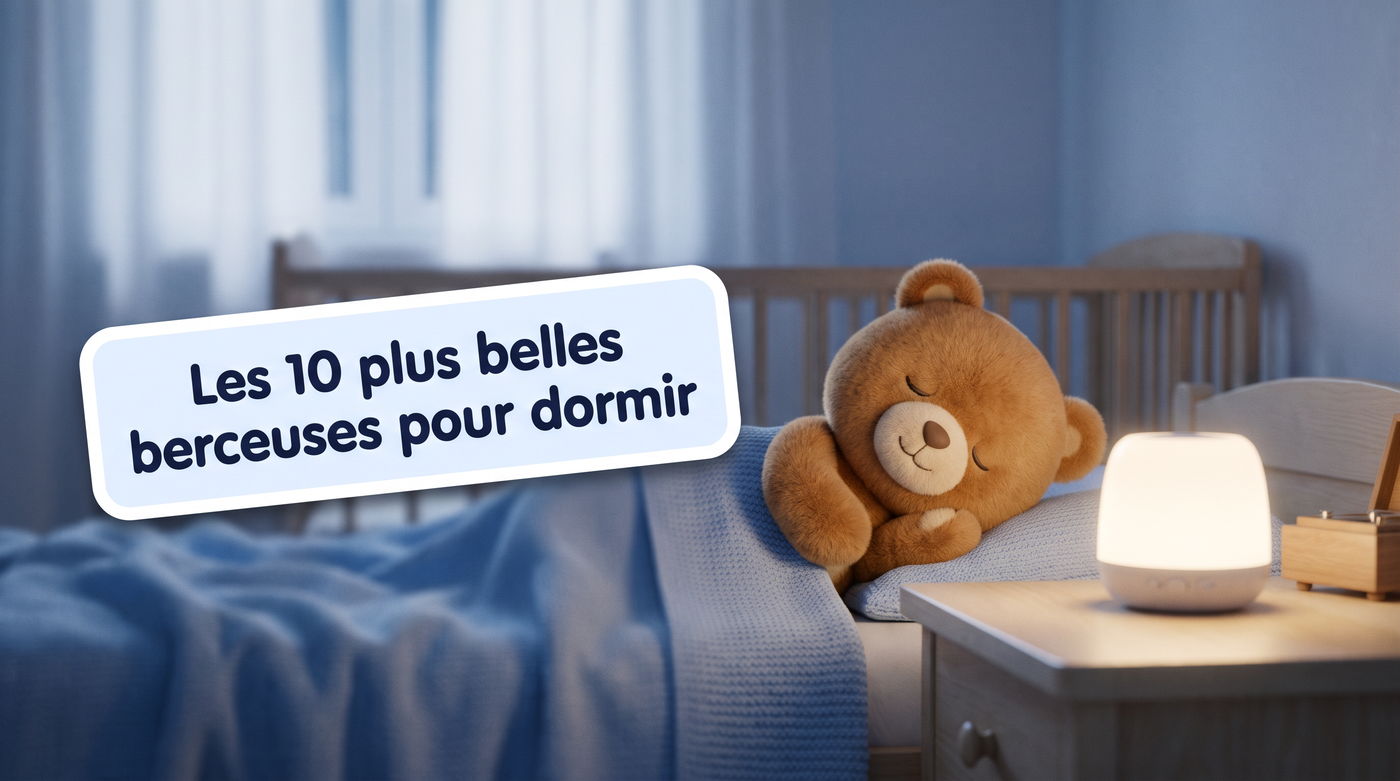
A lullaby for sleep is a soft, repetitive song that slows the heart rate, calms the nervous system and tells the brain it is time to rest. Rock-a-bye Baby, Twinkle, Twinkle, Little Star, Brahms' Lullaby. Here are 10 of the most beautiful classic lullabies, with where each one comes from and how to sing it, a selection for grown-ups and a simple method to settle your baby in just a few minutes.
For centuries, the lullaby has carried little ones off to sleep, and more and more grown-ups are turning to it too. These short, slow, repetitive melodies are more than a lovely tradition: they have a real effect on the brain and body that makes it easier to drift off. In this article you will find 10 of the most beautiful lullabies for sleep, each with a little background and tips for singing it, a quick-fire selection for settling in a few minutes, suggestions for adults and a simple ritual you can start tonight.
Why do lullabies help us sleep?
A lullaby is not like any other song. Its slow tempo, often somewhere between 60 and 80 beats per minute, its repetitive structure and the voice that carries it all work together on the nervous system to prepare for sleep. Far from being mere folklore, it is a genuine sleep aid, as useful for a baby of a few weeks as it is for a stressed-out adult.
A calming effect on body and brain
Research on slow music and relaxation describes several effects that point the same way: a slower heart rate, lower blood pressure and reduced levels of cortisol, the stress hormone. The brain reads the melody as a sign of safety and gradually shifts into rest mode.
In newborns the effect is even stronger. A parent's singing voice combines melody with a reassuring presence, two things no recording ever quite reproduces. That is why a lullaby sung by mum or dad always works better than a recorded version, even though a recording is still very useful as back-up.
The word lullaby is thought to come from the soft "lulla" and "bye" sounds that carers have long used to soothe children, though its exact origin is uncertain. Singing and rocking, on the other hand, have always gone hand in hand: the rhythm of the music mirrors the sway of the cradle.
A reassuring ritual for babies and adults alike
Beyond the biological effect, a lullaby acts as a psychological cue. Repeated every evening, it becomes a landmark that tells the brain: sleep time is coming. This kind of conditioning, known as anchoring, is one of the most effective tools for building lasting sleep habits.
With little ones, it takes hold all the better when nothing changes from one evening to the next, and that includes the lighting. A baby night light switched on at the same moment every night soon becomes the second cue in the ritual, right after the melody.
The effect does not stop with childhood. More and more adults use a lullaby for sleep when dealing with insomnia or anxiety, or simply to unwind after a busy day. The principle is exactly the same: the slow melody draws attention away from intrusive thoughts and invites the body to let go.
The 10 most beautiful lullabies for sleep, and how to sing them
Here is a selection of the best-known lullabies for settling a child to sleep, with a little background on each and a practical tip for bedtime. From traditional English nursery songs to classics from further afield, these ten have been handed down through the generations because they work. You can sing them, hum them or play them on a music box: the soothing effect is the same. It is this same gentle sound that defines the models in our selection of musical baby night lights, designed to accompany bedtime with melodies made for sleep.
1. Rock-a-bye Baby
Probably the best-known English lullaby of all. A traditional nursery song first printed in the eighteenth century, it has a gently swaying melody in a slow triple time that naturally matches the motion of rocking a baby in your arms.
Why it soothes: the lilting one-two-three rhythm invites you to rock as you sing, so movement and melody reinforce each other, and the tune rises and falls in small, predictable steps that are easy on young ears.
Bedtime tip: sing it while swaying slowly from side to side, one sway per bar, and let each repetition get a little slower and quieter than the last.
2. Bye, Baby Bunting
One of the shortest and oldest lullabies in the English nursery tradition. Its brevity makes it the ideal choice for evenings when your little one is already halfway to sleep.
Why it soothes: with only a handful of lines on a narrow, almost chant-like tune, it offers the brain nothing new to process, which is exactly what helps a tired baby let go. Bedtime tip: loop it several times in a row without pausing between rounds, dropping to a murmur on the final repetitions.
3. Hush, Little Baby
A traditional lullaby from the American South, built as a playful chain of promises from parent to child, each verse leading on to the next. Ideal for a child who loves a song that tells a little story.
Why it soothes: the cumulative, list-like structure is gently hypnotic, and the steady tempo never speeds up, so the child follows along until attention quietly fades.
Bedtime tip: sing the verses in the same order every night so your child learns to anticipate them, and slow down noticeably over the last few verses.
4. Brahms' Lullaby
Composed by Johannes Brahms and published in 1868, it is probably the most widely played classical lullaby in the world. Its slow waltz melody is recognised everywhere as the sound of sleep.
Why it soothes: the unhurried three-beat pulse and long, smooth phrases encourage slower breathing, and the melody is so familiar that it feels reassuring even to parents who are running on empty.
Bedtime tip: it works beautifully hummed without words, so if you are not confident with a traditional English text, simply hum or sing it on a soft "la" or "loo".
5. Lavender's Blue
An English folk song whose roots go back several centuries, later softened into a gentle nursery lullaby. Its lilting, dance-like melody has a warm, old-fashioned charm that many grandparents will remember singing.
Why it soothes: the tune moves in an easy rocking rhythm with plenty of repetition, so it sits comfortably in the voice and feels calm without being sleepy-slow.
Bedtime tip: use it as an early song in the routine, during a cuddle or the last nappy change, before switching to one of the slower lullabies in this list.
6. Are You Sleeping (Brother John)
The English version of the French round Frère Jacques. Livelier than the other lullabies in this list, it works best at the start of the ritual to use up any leftover energy before moving on to slower melodies.
Why it soothes: its four short phrases are easy to remember and pleasantly predictable, and because it can be sung as a round it turns bedtime into a shared moment rather than a battle.
Bedtime tip: sing it together with brothers and sisters as a round, then repeat it on your own, slower each time, as the signal that the playful part of the evening is over.
7. All Through the Night
A traditional Welsh melody, first published in the late eighteenth century and later given English words in the Victorian era. It is sung in Welsh, English and many other languages, and its tender, flowing tune makes it one of the loveliest night-time songs in the British repertoire.
Why it soothes: the long, arching phrases and slow, even tempo feel like a gentle exhale, and the melody returns again and again to the same comforting line.
Bedtime tip: it suits a low, soft voice, so pitch it lower than feels natural at first and keep a hand resting lightly on your child's back as you sing.
8. Sleep, Baby, Sleep
A traditional cradle song that came to English from an old German lullaby and has been sung in British nurseries for generations. Short and pastoral, with gentle imagery of the countryside at night, it captures young children's attention while staying brief.
Why it soothes: the simple, repeated opening phrase works almost like a spoken instruction set to music, and the slow, even beat is easy to match to a rocking motion.
Bedtime tip: pair each repetition of the opening phrase with a slow stroke of your child's hair or back, so touch and melody become one familiar signal.
9. Twinkle, Twinkle, Little Star
Its words come from an English poem published in 1806, set to an eighteenth-century French melody that Mozart also used for a famous set of variations. Ideal paired with a soft light projected on the ceiling to create a cosy, cocoon-like atmosphere.
Why it soothes: almost every child already knows the tune, and familiarity is itself calming; the melody climbs and then steps gently back down, like a small musical sigh.
Bedtime tip: sing it while your child watches stars drift slowly across the ceiling, and let the song be the last thing before you say goodnight.
10. Golden Slumbers
One of the oldest lullabies in the English language, first appearing as a song in a play co-written by Thomas Dekker in 1603. Longer and more wistful than the others, its tender, slightly melancholy mood makes it a deeply moving lullaby, perfect for a gentle, affectionate bedtime.
Why it soothes: its slow pace and soft, rounded phrases carry a sense of calm and protection, and the gentle melancholy helps an overexcited child wind down emotionally as well as physically.
Bedtime tip: save it for the very end of the routine, once the lights are low, and sing it almost in a whisper so it fades naturally into silence.
Lullabies to fall asleep in 5 minutes: our quick-fire selection
When the goal is to settle quickly, whether it is a baby who is fighting sleep, a child who is exhausted but wound up, or a nap to squeeze in during a journey, choose lullabies that are very short, very repetitive and sung at a slow tempo. Repetition is the key: it starves the brain of new stimulation, which speeds up the switch into sleep.
Three ideal lullabies for settling quickly
- Bye, Baby Bunting, a few lines you can repeat on a loop. The most effective within a few minutes.
- Are You Sleeping (Brother John), a round repeated 3 or 4 times while gradually slowing the tempo.
- Brahms' Lullaby, hummed, without words, even more soothing for babies under 6 months.
To make it even more effective, gradually lower the volume of your voice with each repetition. This fading sound mimics the gradual withdrawal the brain naturally associates with letting go.
Then there are the evenings when your voice gives out, when dinner is running late, or when you have to split yourself between two bedrooms. On those nights, a melody that plays on its own and switches itself off avoids waking your child up again just as you leave the room.
 An example Rotating Projector Night Light with 8 Melodies Eight lullabies, six projections rotating through 360°, a 15 or 30-minute timer and a remote control so you can switch it off without going into the room. View the night light
Lullabies for adults: do they work too?
Yes, and more and more people are discovering it. A lullaby for adults relies on the same principles as one for a baby: a slow tempo, a repetitive melody and soothing low frequencies. Research on music and sleep points in this direction, although it cannot be turned into a promise with figures attached: listening to a slow melody before bed helps release tension, which makes it easier to fall asleep.
What kind of lullaby should adults choose?
Traditional children's lullabies do work, but many adults prefer instrumental versions without words, so the mind does not latch on to the text. The best choices:
- Brahms' Lullaby, as a solo piano version, the most universally effective.
- Debussy's Clair de Lune, technically not a lullaby, but its slow tempo and suspended harmonies have the same effect.
- Instrumental Celtic lullabies, where the harp or flute creates a wonderfully hypnotic effect.
- Modern lo-fi lullabies, ideal for adults who struggle with the classical repertoire.
How to build a lullaby into the bedtime routine
How well a lullaby works depends less on the song you choose than on the consistency of the ritual. For the melody to become a genuine sleep cue, you need to repeat it every evening in the same setting. Here is a simple ritual you can start tonight. It works at any age, as long as you adapt the lighting: for an older child, a kids' night light they switch on themselves gives them an active role at bedtime, which matters just as much as the melody.
Dim the lights 15 to 20 minutes before the lullaby. Low, warm light supports the production of melatonin. A soft background sound such as white noise can add to the effect, and you can browse our selection of white noise night lights, which combine gentle light with soothing sound to prepare for sleep.
Pick a single lullaby as your main cue. Repeating it exactly the same way every evening is what creates the anchor. You can add others alongside it, but one of them should always remain the real bedtime lullaby.
The ideal tempo is around 60 beats per minute, close to a resting heart rate. Sing gently, without straining your voice. The aim is to set the rhythm, not to perform.
Over the repetitions, three to five times through the same lullaby, softly lower your voice until it is barely a murmur. This sound fade helps the brain slip into deep sleep.
Once your child's breathing has clearly slowed, finish the lullaby by humming the last few notes, then leave the room without any sudden break in sound. Gentle continuity is essential to avoid waking them up again.
It is this last step that causes the most trouble. The silence that follows your departure is often what wakes a child, and many parents look for something that takes over from their voice without replacing it, then switches itself off once sleep has settled in.
 In the same spirit Rechargeable Musical Night Light Twenty-four sounds, including white noise and lullabies, seven colours, five brightness levels and a 30, 60 or 90-minute timer. View the night light
A lullaby's power comes as much from the melody as from the setting in which it is heard. Soft light, a calm voice, slow movements: it is the whole package that works, not the song alone.
Your questions about lullabies
Which lullaby gets a baby to sleep fastest?
Very short, very repetitive lullabies are the most effective. Bye, Baby Bunting is probably the quickest to work, thanks to its handful of lines that you can repeat on a loop. Brahms' Lullaby, hummed, also works very well with babies under 6 months. The trick: gradually slow the tempo and lower the volume with each repetition.
Can adults listen to lullabies to fall asleep?
Yes, and it is even worth trying if you have mild insomnia or feel anxious at bedtime. Go for instrumental versions without words, so your mind does not latch on to the text. Brahms' Lullaby on solo piano, Debussy's Clair de Lune or instrumental Celtic lullabies work particularly well for adults.
What is the best-known lullaby in the UK?
Rock-a-bye Baby is probably the best-known English lullaby, followed very closely by Twinkle, Twinkle, Little Star and Brahms' Lullaby. The first two belong to the oral tradition passed down from generation to generation since the eighteenth and nineteenth centuries, and they appear in just about every collection of English nursery songs.
From what age can you sing lullabies to a baby?
From birth, and even before. A baby's hearing is working during the last trimester of pregnancy, and newborns recognise their mother's voice from their very first days. Singing a lullaby regularly towards the end of pregnancy and then after the birth creates a very reassuring sound landmark for your baby.
Should you sing or play a recorded version?
Ideally, both. A lullaby sung by a parent brings together melody and presence, and nothing replaces that familiar voice. That said, a music box or a musical night light that takes over once the parent has left helps extend the soothing effect and see your child through any brief night-time wakings.
Want to bring a little softness into your baby's room?
Musical night lights, starry projectors, portable designs: discover our carefully selected models to accompany the bedtime ritual.
VISIT THE SHOP