
Cart (0)
Your cart is empty
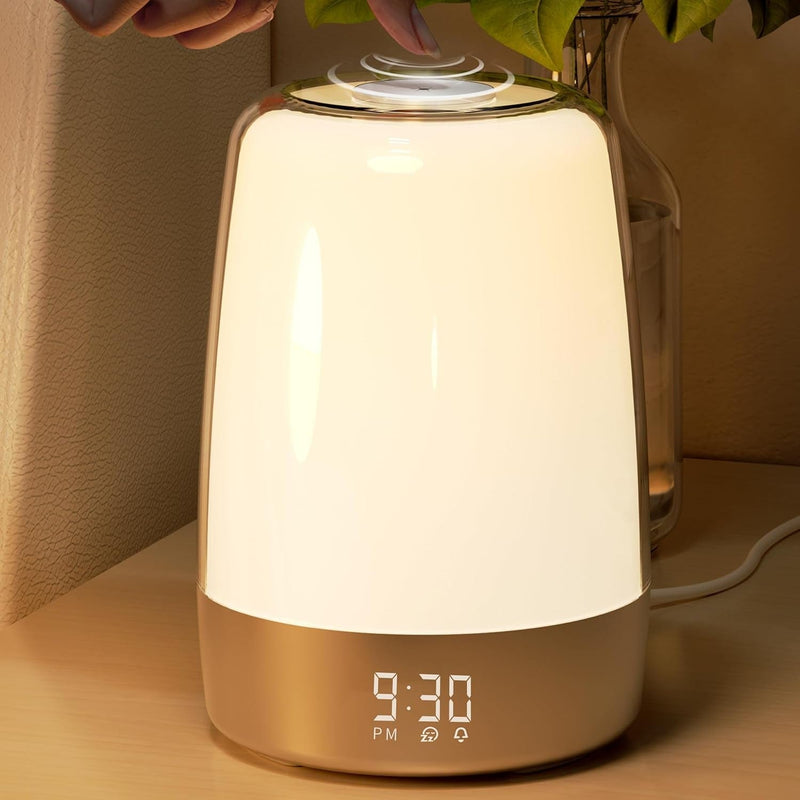
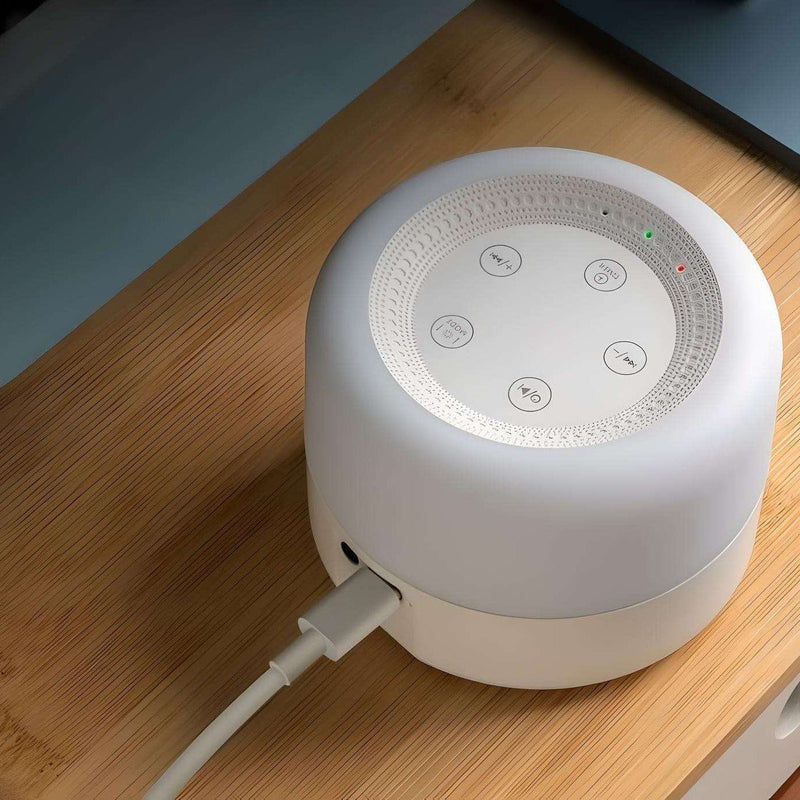
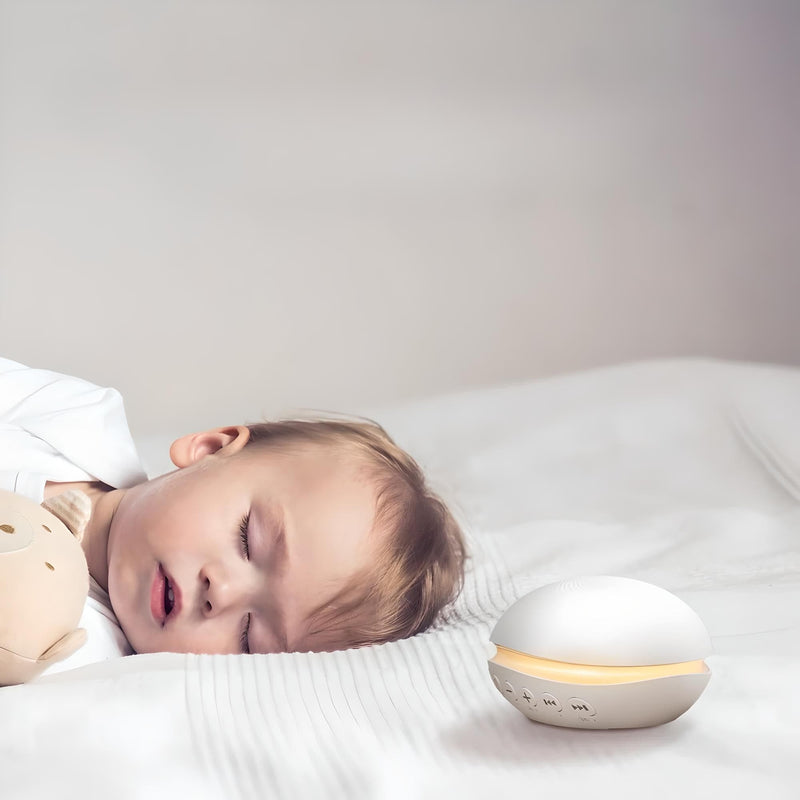
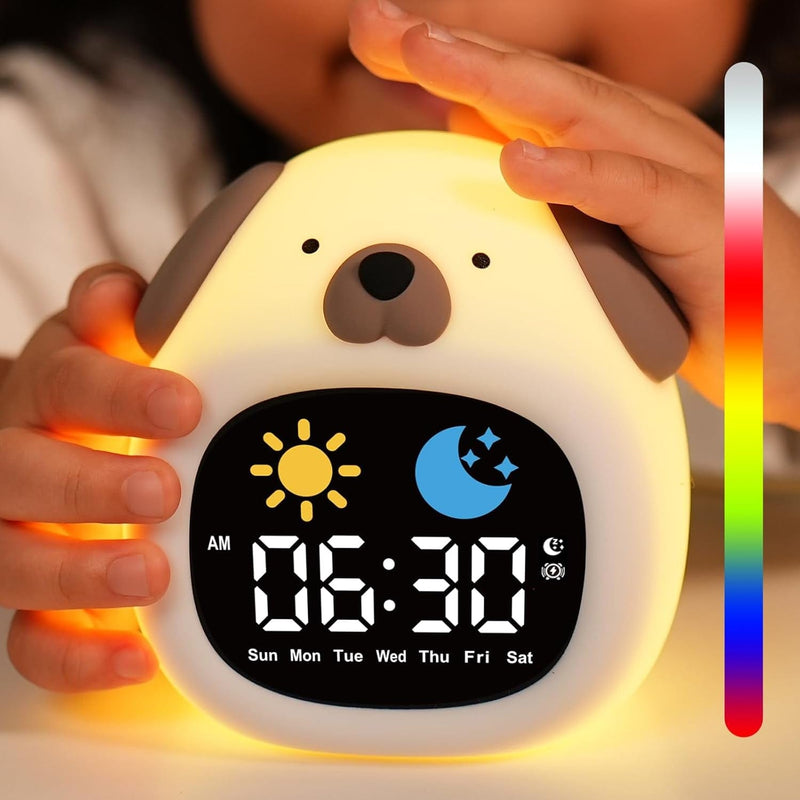
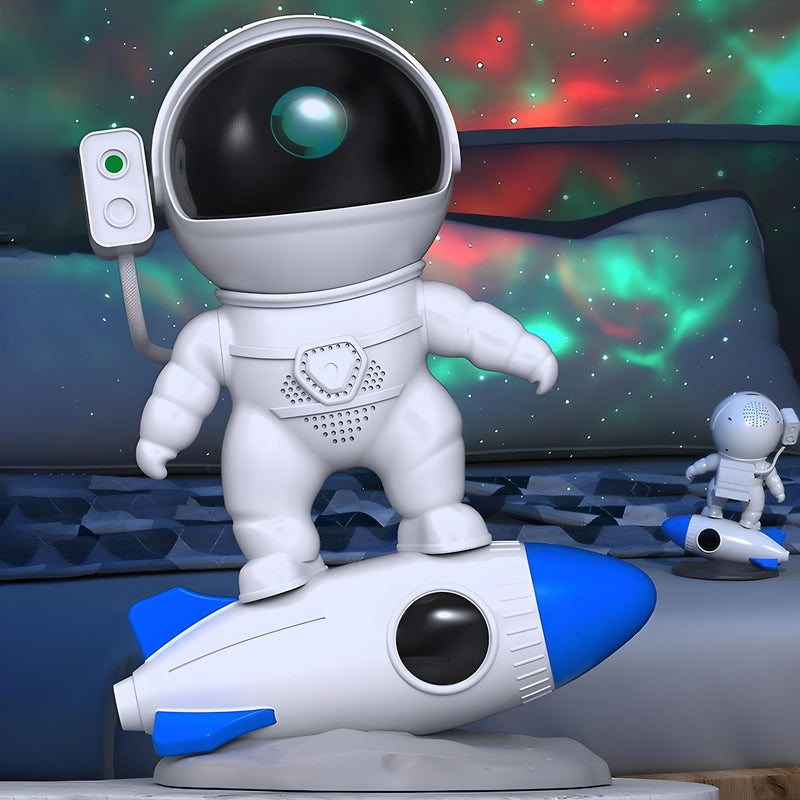
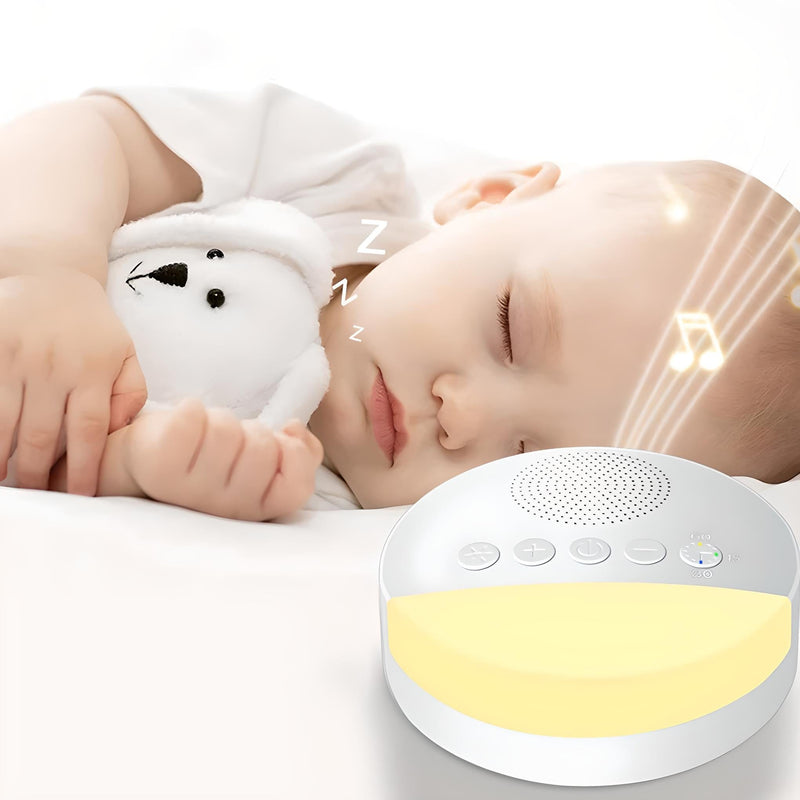
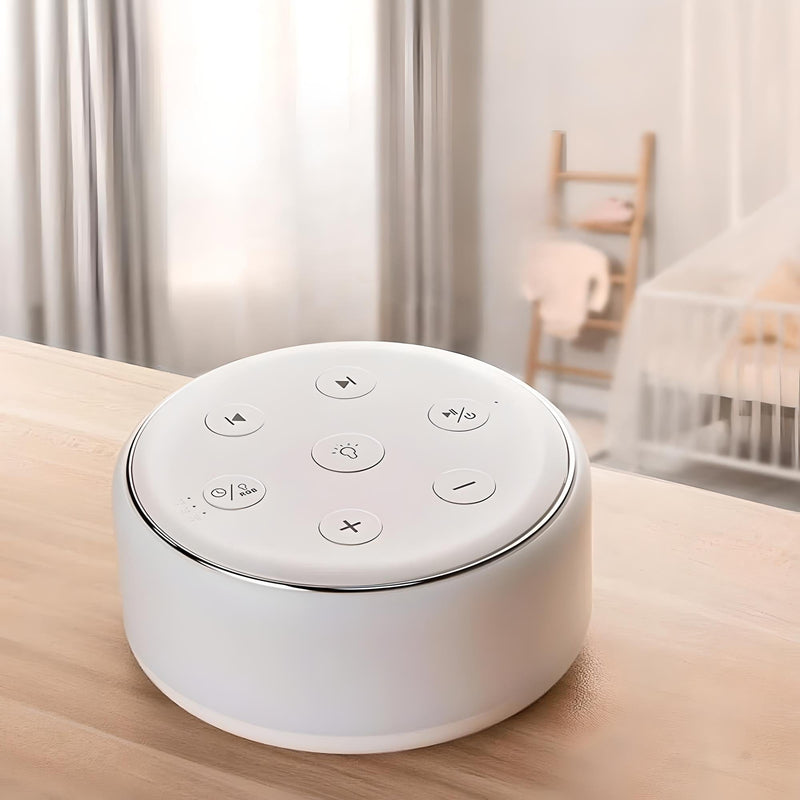
A white noise night light masks the sounds of the house, and the light does the rest. For bedtimes that go on and on.

CE and RoHS compliant

Gentle light

LEDs that stay cool

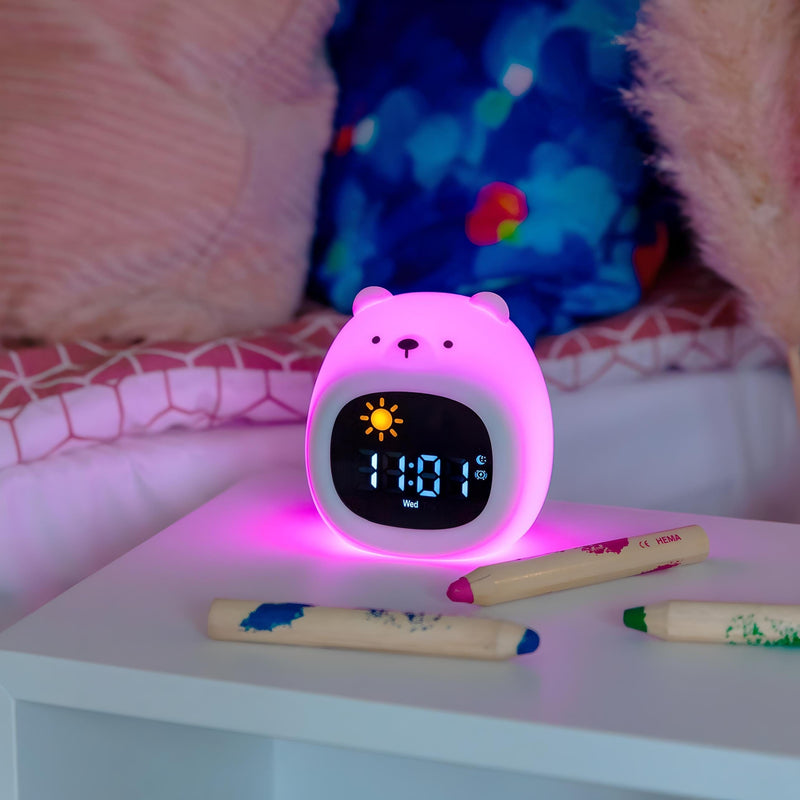
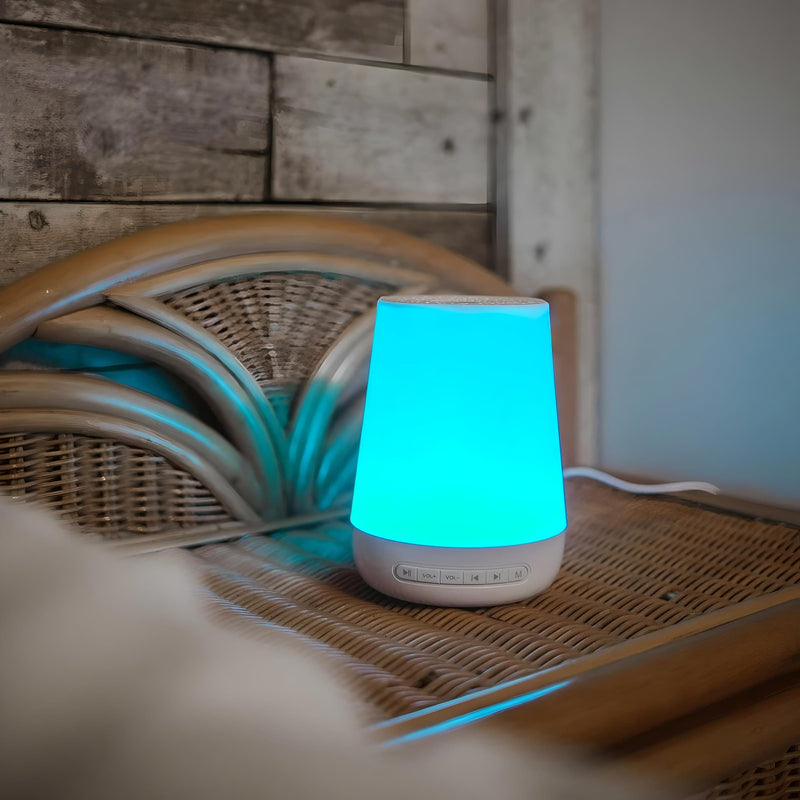
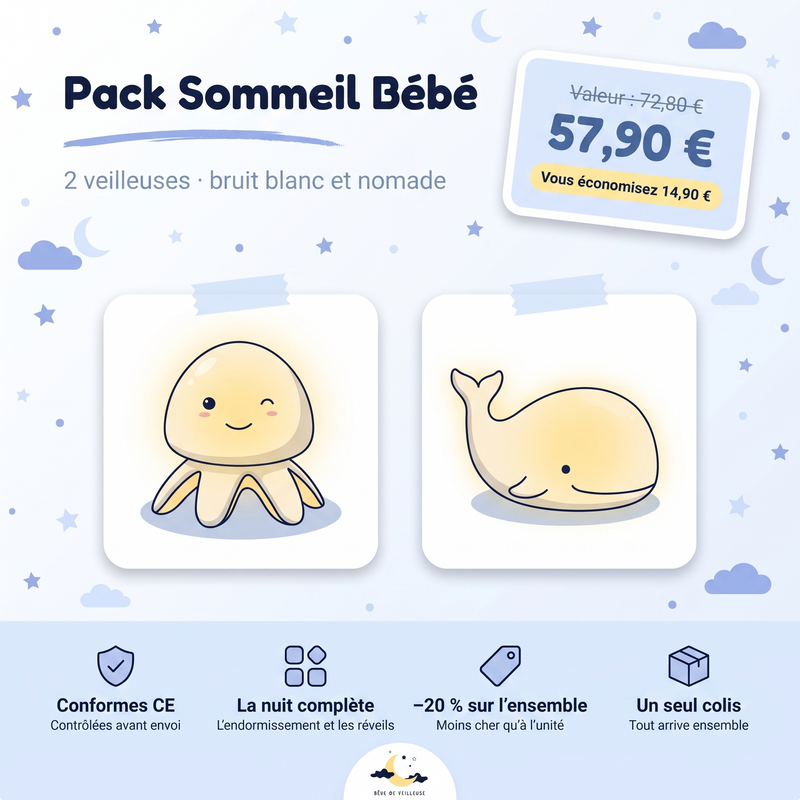 -21%
-21%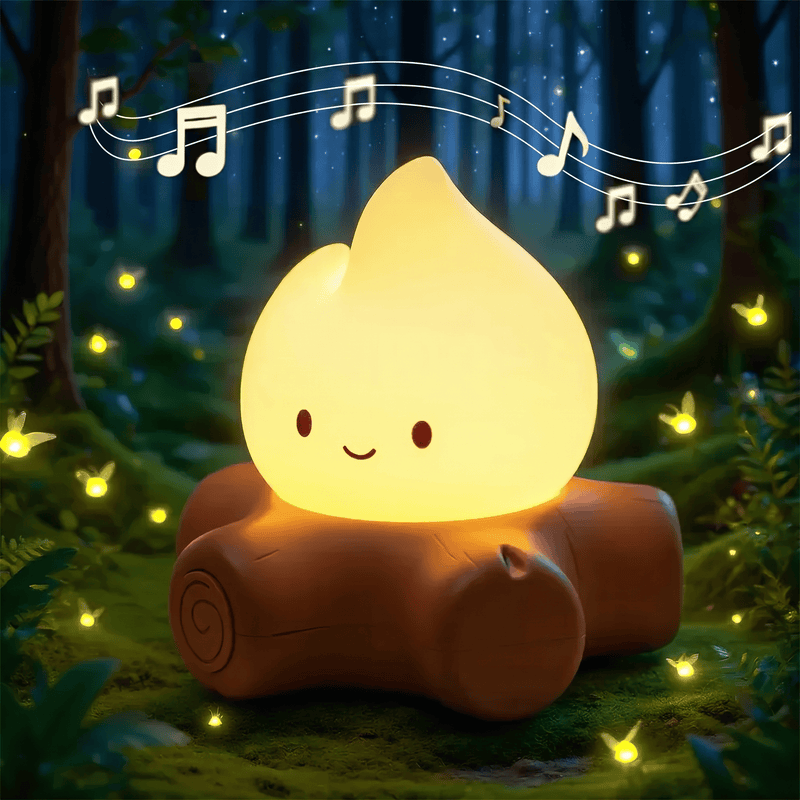
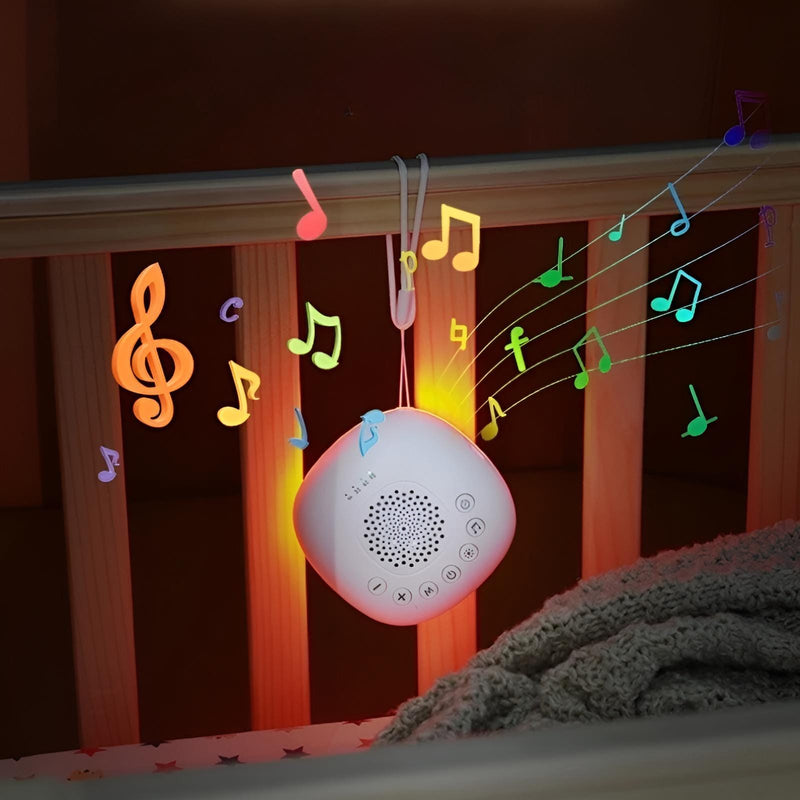
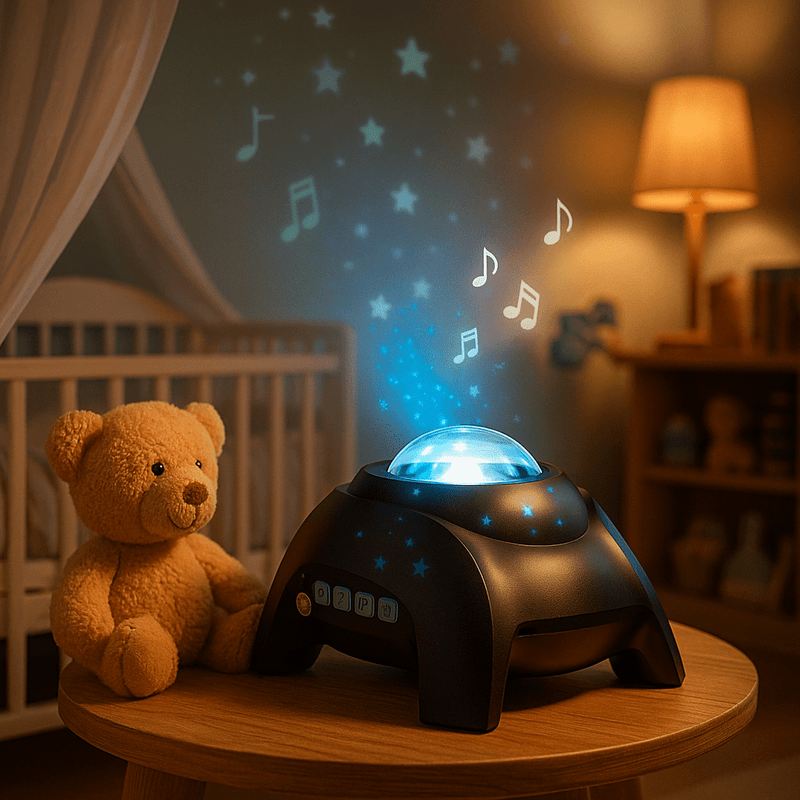
A white noise night light plays soothing sounds — heartbeat, rain, wind, waves — that recreate the familiar soundscape of the womb and help baby fall asleep in under 15 minutes on average. Our selection brings together more than 25 tested models, from plush versions for newborns to combined sound-and-light models that see your child through the whole night. Here you will find the night light that suits your child's age, your budget and your day-to-day routine.
White noise is a continuous sound that covers the entire audible spectrum evenly, between 20 Hz and 20,000 Hz. It masks household noises — footsteps in the hallway, the TV in the living room, a passing car — which are the leading cause of night waking in babies aged 0 to 12 months.
Several paediatric studies show that white noise recreates the sound environment of the womb, measured at around 70–90 decibels during pregnancy. This familiarity reassures the baby and helps them fall asleep faster.
Our range covers every need, from newborns of 0 months to children of 6. Each model was chosen on three criteria: sound quality, battery life and ease of use for tired parents at 3 in the morning.
| Type of model | Recommended age | Sounds available | Battery life | Ideal use |
|---|---|---|---|---|
| White noise soft toy | 0 to 24 months | 6 to 8 sounds | 8 to 12 h | Cot, naps, travel |
| Sound and light night light | 6 months and over | 10 to 20 sounds | 10 to 20 h | Bedroom, all night |
| Portable sound machine | All ages | 15 to 30 sounds | 15 to 25 h | Pushchair, car, holidays |
| Starry sky projector night light | 12 months and over | 8 to 15 sounds | 6 to 10 h | Bedtime routine, fear of the dark |
| Adult/family model | Adult | 20 to 40 sounds | Mains powered | Insomnia, tinnitus, working from home |
For newborns, we recommend first and foremost a white noise plush night light, which combines a reassuring comforter and a sound function in a cot-friendly format.
The right model depends on your child's age, the layout of their bedroom and your lifestyle. Five technical criteria make the difference between a device you use every night and a night light that ends up in a drawer after two weeks.
Not all white noise is equal. An entry-level model offers 4 to 6 sounds, which baby may tire of after a few weeks. Mid-range models offer 10 to 15 sounds, and premium versions go beyond 20 recorded sounds.
A night light that switches off at 2 am wakes the baby. The minimum recommended battery life is 8 hours to cover a full night. USB rechargeable models offer 10 to 25 hours depending on the volume used.
An automatic switch-off function is essential after 3 months. Paediatricians advise against continuous exposure to white noise all night long, to protect hearing development. A timer adjustable to 15, 30 or 60 minutes lets you cover just the falling-asleep phase.
Volume is the number one safety criterion. A poorly calibrated night light can exceed 85 decibels, the equivalent of heavy traffic. Choose a device with at least 5 volume settings and a maximum volume capped at 50–60 dB at 1 metre.
If you travel, visit the grandparents at weekends or use the car to get baby to sleep, a compact model weighing under 200 grams with a pushchair clip makes daily life easier. For a bedroom, a larger model with a starry sky projector adds a soothing visual element.
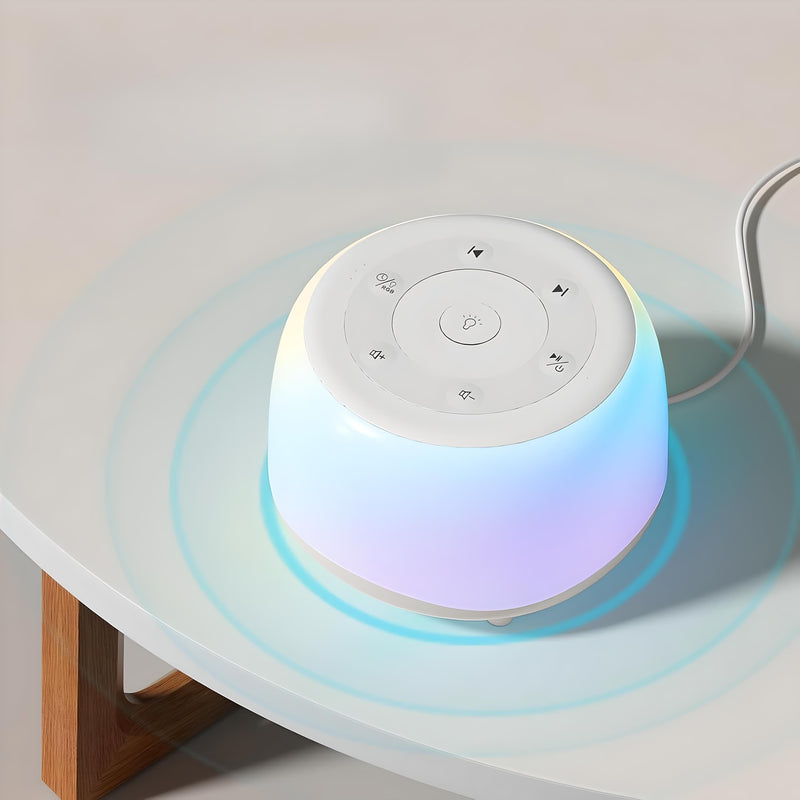
Combined sound-and-light models now account for 65% of sales in this category. They meet a twofold need: soothing baby with sound and reassuring a child who is afraid of the dark from around 18–24 months.
Warm amber light, at around 2,700 kelvin, does not disrupt the production of melatonin, the sleep hormone. By contrast, cool white light above 4,000 kelvin delays falling asleep by 30 to 60 minutes depending on the child.
| Colour temperature | Effect on sleep | Recommendation |
|---|---|---|
| 2,200 to 2,700 K (amber) | Supports melatonin | Ideal all night |
| 3,000 to 3,500 K (warm) | Neutral for sleep | Fine for the routine |
| 4,000 K and above (cool) | Blocks melatonin | Avoid in the evening |
For children over 2, colour-changing versions (red, green, blue, purple) become a fun cue in the bedtime routine. Our kids' night light collection brings together the models specifically suited to this age group.
White noise is a powerful tool that must be used with respect for a child's hearing development. In 2014 the American Academy of Pediatrics published a study that alerted parents to the risks of misuse. Here are the essential rules to know.
The night light should be placed at least 2 metres from the cot or bed. At less than 1 metre, baby's ears are exposed over several hours to cumulative sound levels equivalent to a busy street.
The volume measured at the child's ear should never exceed 50 decibels. For comparison, a normal conversation is around 60 dB and a hoover 75 dB. A continuous volume above 65 dB can lead to long-term hearing problems.
All products sold in Europe must carry the CE marking. For toys and night lights intended for children under 3, the EN 71 standard guarantees there are no small detachable parts and that the materials are non-toxic. The EN 62115 standard covers the electrical safety of toys.
Nearly 40% of our adult customers buy a white noise night light for their own use. Tinnitus, chronic insomnia, working from home in a noisy environment or sharing a bed with a light sleeper are the most common reasons.
Models designed for adults generally offer 25 to 40 sounds, a maximum volume above 75 dB and a sleep timer programmable for up to 8 hours. Some include an ambient noise sensor that automatically adjusts the volume.
Many parents hesitate between a traditional musical night light and a white noise model. The choice mainly depends on the child's age and what you are trying to achieve.
| Criterion | White noise | Gentle music |
|---|---|---|
| Best age | 0 to 18 months | 12 months and over |
| Main effect | Masks background noise | Creates a soothing ritual |
| Risk of dependency | Moderate (wean off at 12 months) | Low |
| Cognitive stimulation | Neutral | Positive (memory) |
| Recommended volume | 40 to 50 dB | 35 to 45 dB |
Hybrid models combine both functions and let usage evolve as your child grows. A musical baby night light remains the go-to choice for the transition after 12 months, when the bedtime ritual takes over from the simple need to mask noise.
 Free delivery from £55Across the whole range
 Dispatched within 1 to 2 working daysTracked delivery
 Easy returns within 30 daysTime to try it at home
 Reply within 24 hoursMonday to Friday
 Secure paymentCard, PayPal, Apple Pay, Shop Pay
