
Cart (0)
Your cart is empty
An alarm clock night light puts the time and the light in one place. For mornings when they wake up too early, and for those who don't like ringing alarms.

CE and RoHS compliant

Gentle light

LEDs that stay cool
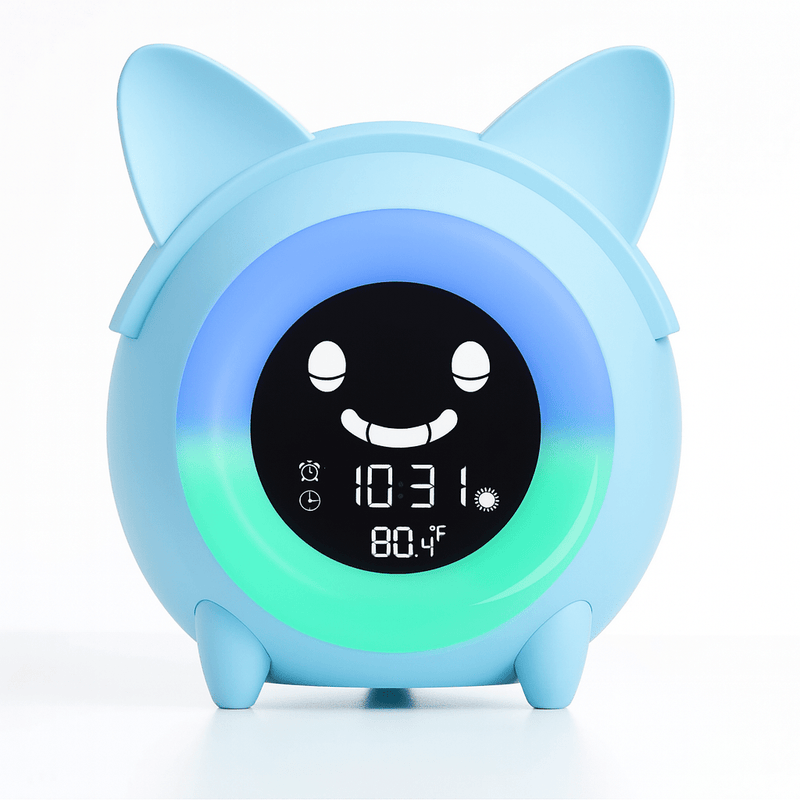
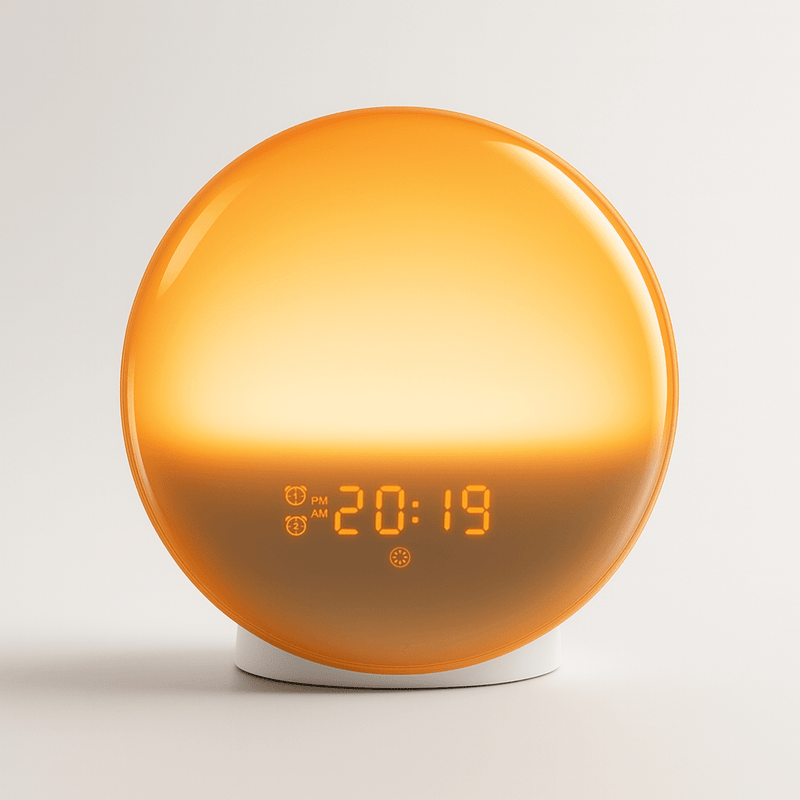
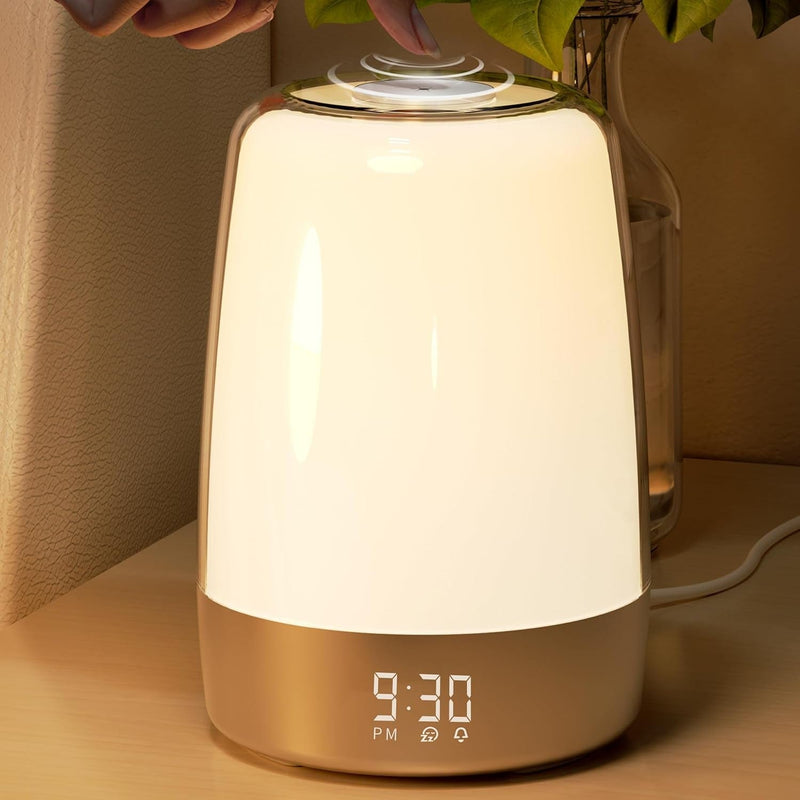
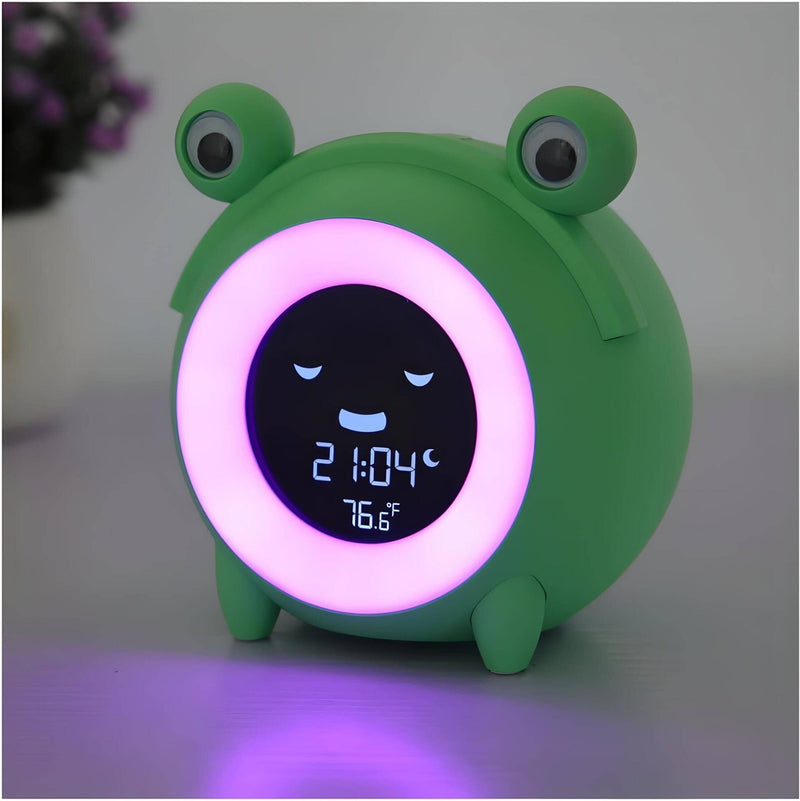
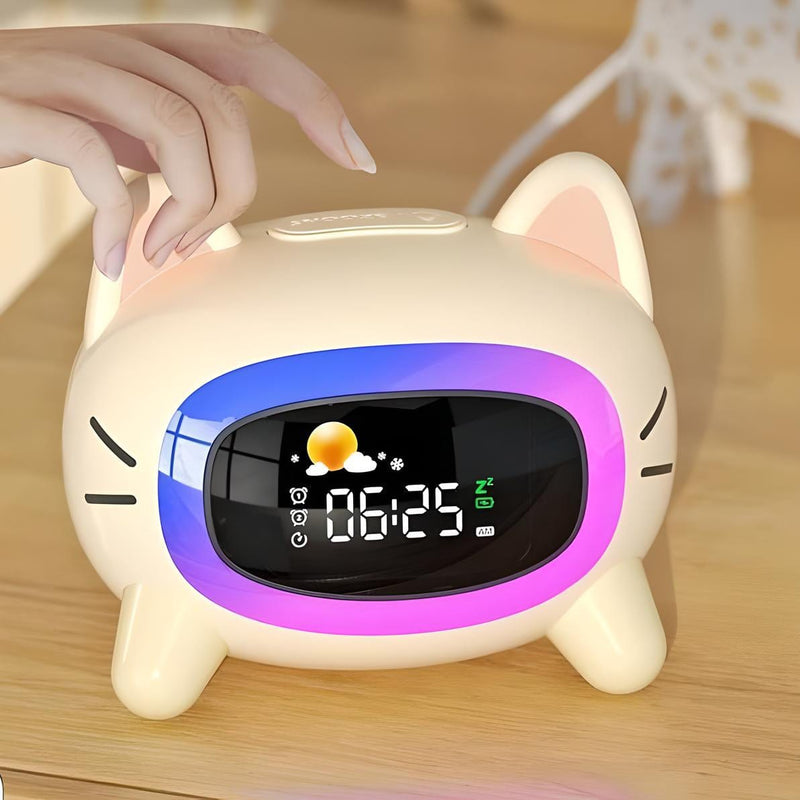
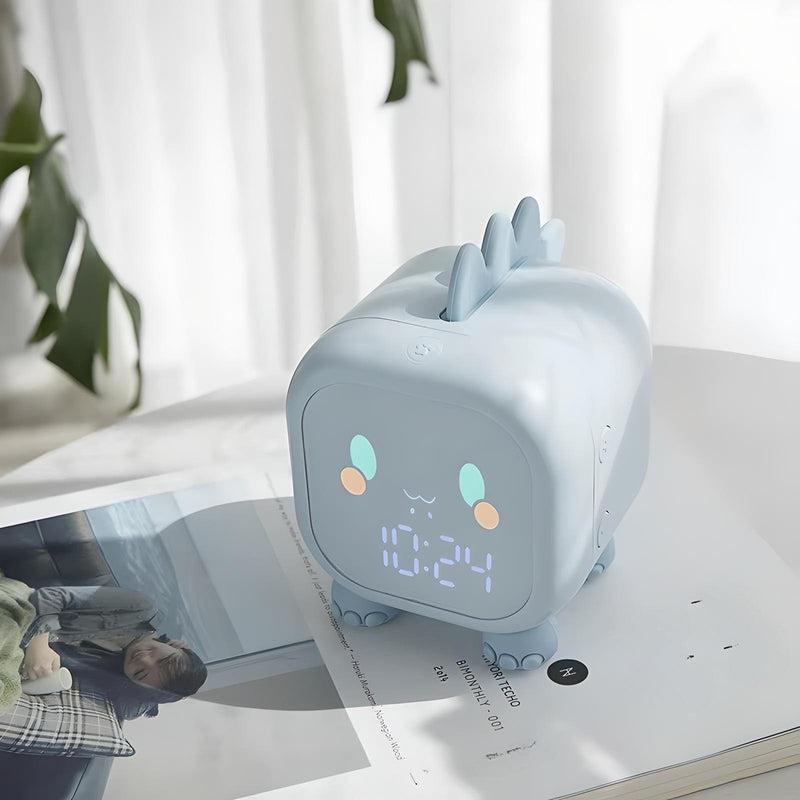
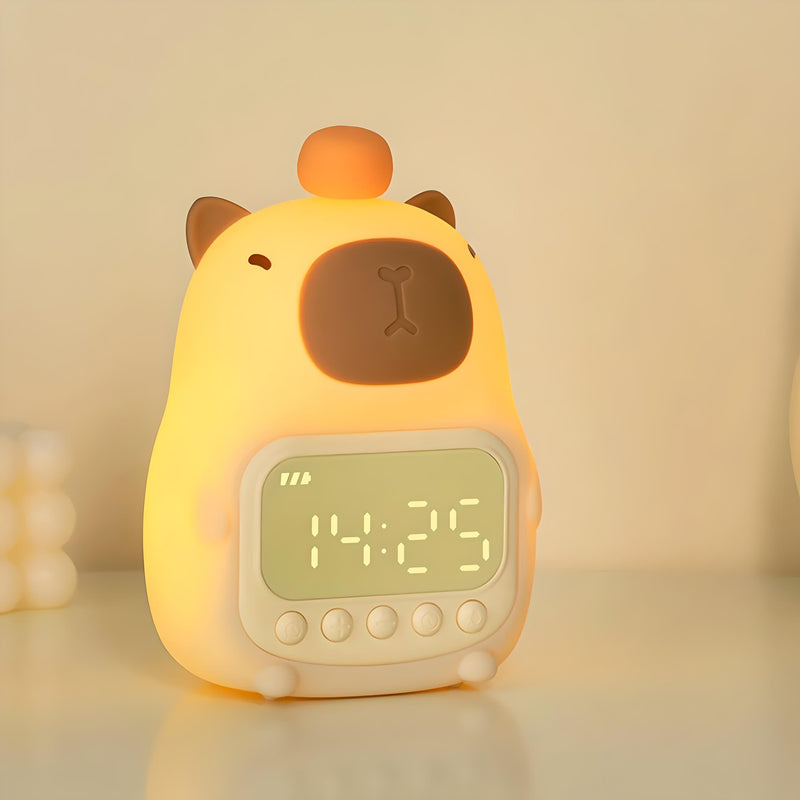
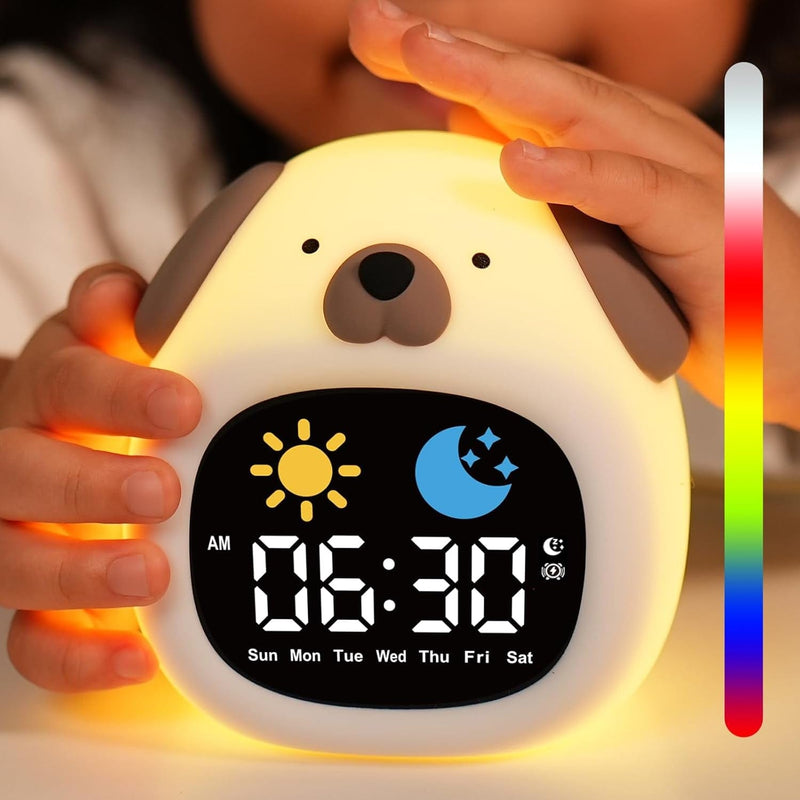
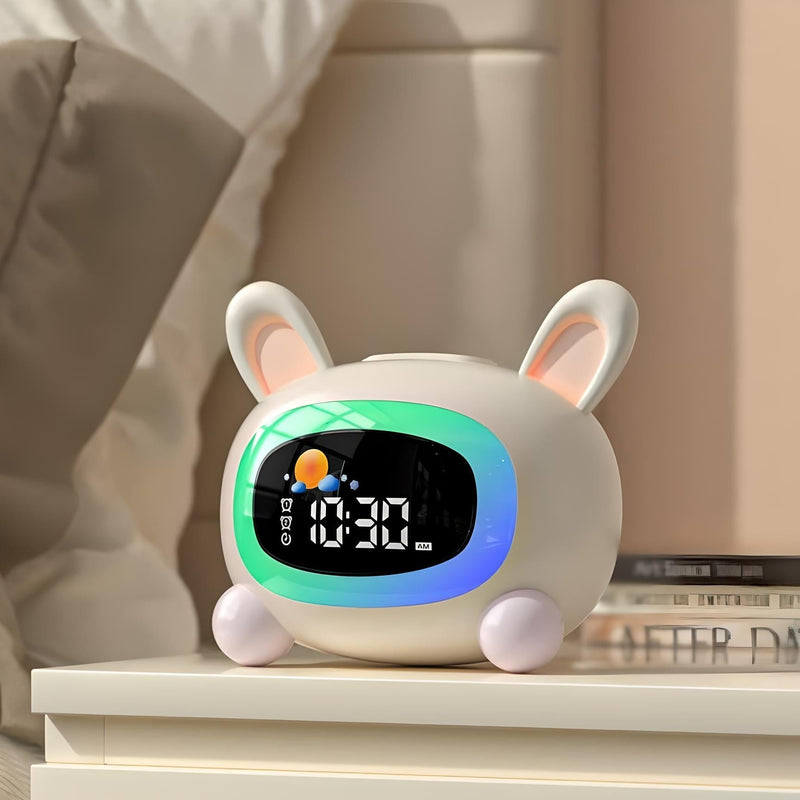
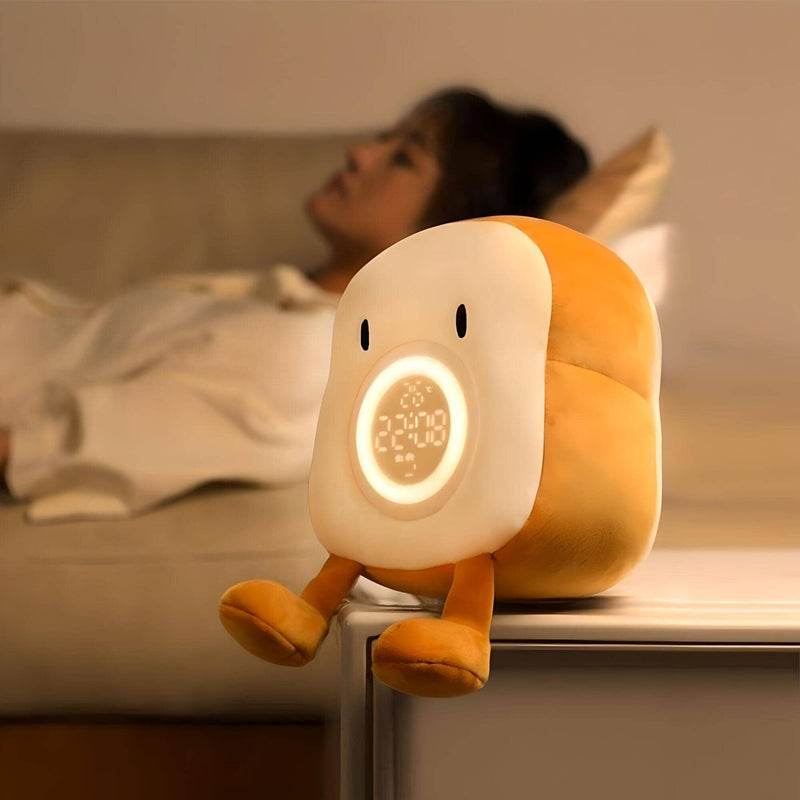
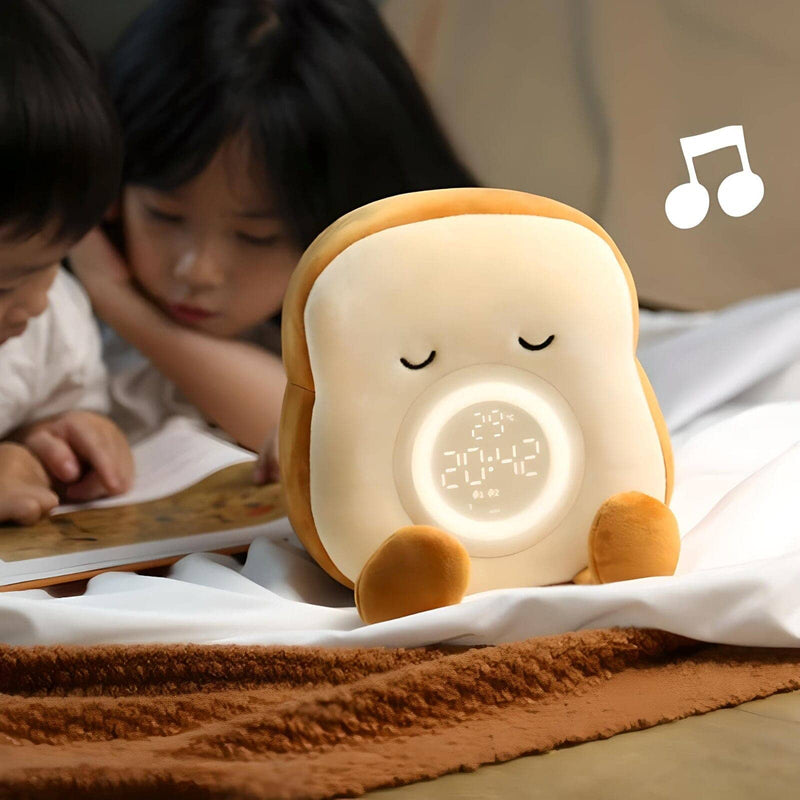
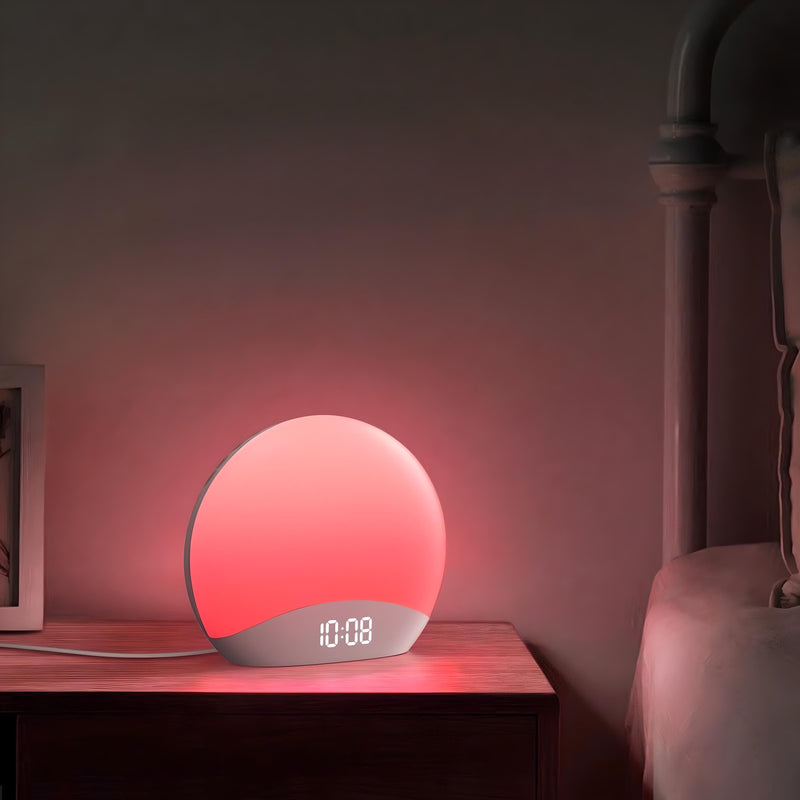
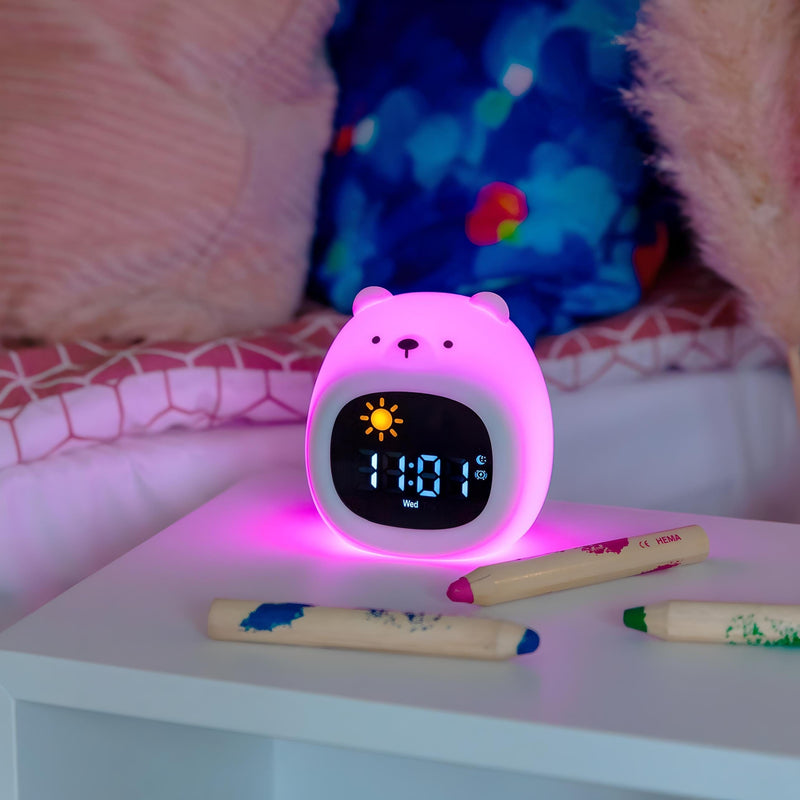
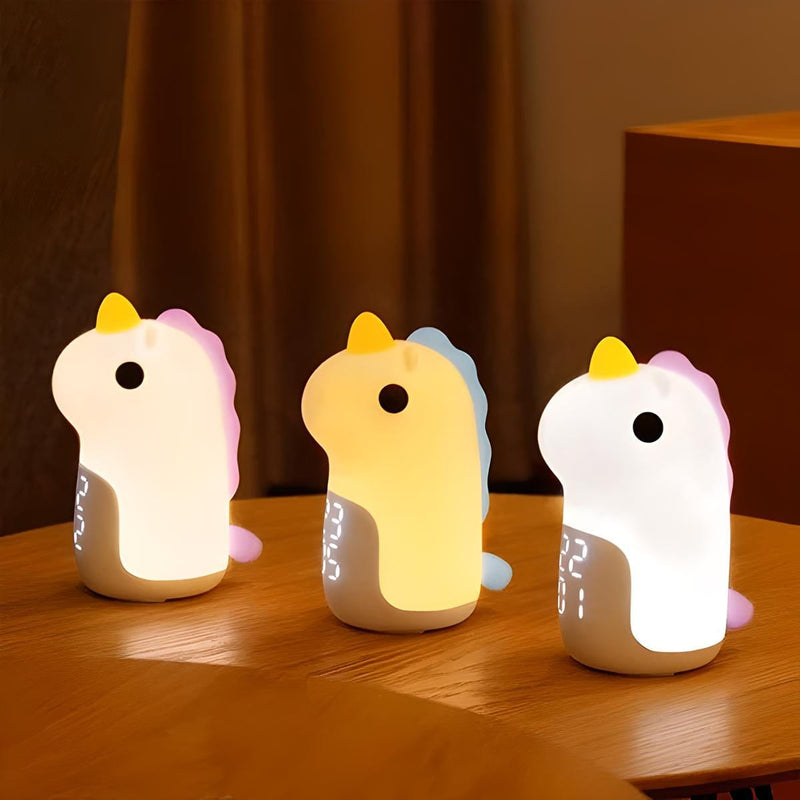
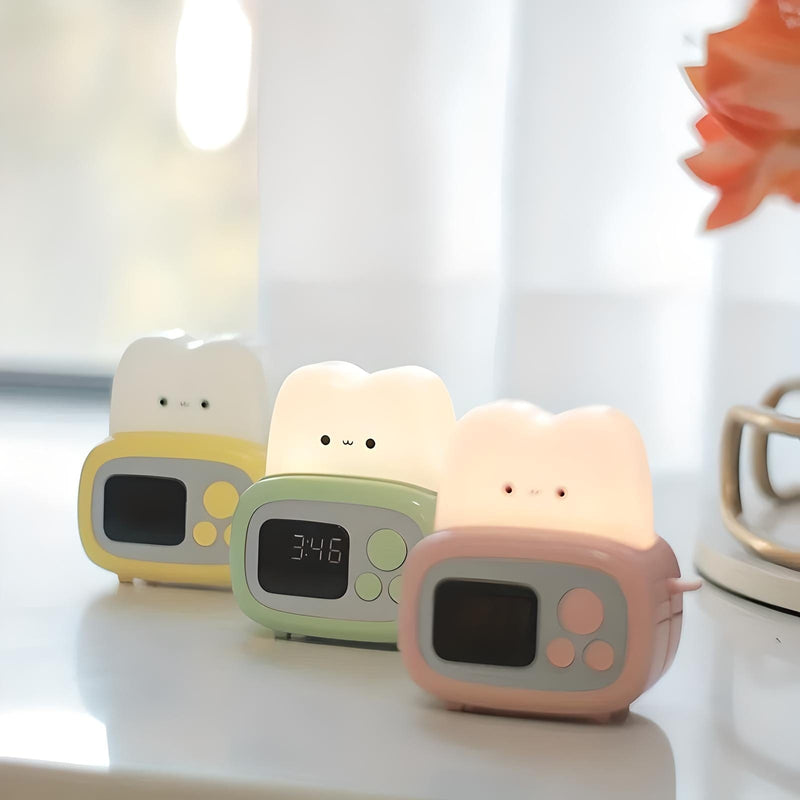
An alarm clock night light combines two essential jobs in a single device: softly lighting the bedroom at night and easing the morning wake-up with gradual light or a visual signal. It suits children who are learning to recognise when it's time to get up just as well as adults looking for a gentler start than a shrill alarm. In this selection you'll find models for every age and every use, with features ranging from a simple light indicator to a full sunrise simulator.
An alarm clock night light is a hybrid device that performs two complementary functions over a 24-hour cycle. At night, it gives off a soft glow — usually between 0.5 and 5 lux — to reassure a child or light the way for a night-time trip without disrupting sleep. In the morning, it signals wake-up time with a change of colour, a light that gradually brightens, or an audible alarm.
What sets it apart from a standard night light is this time element: a simple model shines continuously for as long as it is switched on, whereas an alarm clock model follows a timed programme. That is also what distinguishes it from a traditional clock radio, whose light is usually limited to displaying the time.
For purely night-time use with no alarm function, a classic kids' night light is a better fit and often less expensive.
This selection covers the four main families of alarm clock night lights on the market. The table below sums up the main uses of each before we go through the criteria in the sections that follow.
| Type of model | Who it's for | Main function | Typical price bracket |
|---|---|---|---|
| Children's alarm clock night light | Ages 2 to 8 | Visual bedtime/wake-up cue | Budget to mid-range |
| Adult sunrise simulator | Teenagers and adults | Gradual wake-up over 15–30 min | Mid-range to premium |
| Clock radio night light | All ages | Audible alarm + soft lighting | Mid-range |
| Wake-up indicator night light | Children aged 3 to 7 | Learning when it's time to get up | Budget |
Children's models work on two levels: a reassuring look (bunny, unicorn, bear, favourite characters) and gentle sleep training. The idea is simple — the screen or the character's face shows a moon when it's time to sleep, then switches to a sun at the time set for getting up. This visual cue helps children who can't yet tell the time understand whether they're allowed to get up or not.
What to look for in this category:
Avoid models whose minimum brightness exceeds 10 lumens: they are too bright, delay melatonin production and can disrupt the process of falling asleep.
For adults, the star feature is the sunrise simulator. This device recreates an artificial sunrise: the light gradually increases in intensity — from 0 to around 300 lux on entry-level models, up to 10,000 lux on light therapy models — over an adjustable period of 15 to 30 minutes before the set wake-up time.
Backed by clinical studies, this type of alarm reduces the sleep inertia many people feel in the morning. In practice, you feel less groggy in the first 15 minutes after getting up, especially in winter when the lack of natural light throws the circadian rhythm off.
Technical points to check:
The clock radio night light is aimed at people who want an all-in-one device on the bedside table: time display, standard alarm, FM radio and a handy night light. Unlike a sunrise simulator, the lighting plays a supporting role — it's there to help you find your way at night or read for a few minutes before sleep, not to simulate a sunrise.
| Criterion | Market standard | What to aim for |
|---|---|---|
| Time display | Fixed red LED | LED dimmable over at least 4 levels |
| Built-in night light | Manual switch-on | Motion sensor or touch control |
| Sound source | FM radio only | FM + Bluetooth + USB charging port |
| Memory backup | None during a power cut | CR2032 coin cell or backup battery |
The wake-up indicator is a category of its own: it's a learning tool first and a night light second. The approach was popularised by Montessori and positive parenting methods — children learn to tell the difference between when they can get up (sun showing, yellow or green light) and when they need to stay in bed (moon showing, blue or red light).
This type of product is generally recommended from two and a half to 7 years old. Feedback from parents shows morning routines improving within 2 to 3 weeks of regular use, as long as you stick to the rules.
To complete a child's bedroom, some parents pair this type of clock with a musical night light for bedtime, or a projector night light to create a soothing scene on the ceiling.
The choice comes down to three things: the user's age, the main purpose (reassurance, waking up, learning the time) and the technical features. Here's how to narrow it down.
Before 18 months, a simple night light is enough — the alarm function will only make sense later on. From two and a half, a wake-up indicator model really comes into its own. The key things to check:
For a baby's room, a white noise night light can round off the set-up by masking household noise during the first hours of sleep.
Expectations are different: the wake-up needs to be gradual, the design discreet and the features suited to everyday use. Here are the criteria that make the difference in this category:
| Need | Feature to prioritise | Technical benchmark |
|---|---|---|
| Gentle wake-up | Sunrise simulator | Rises to 300 lux over 30 min |
| Beating the winter blues | Certified light therapy lamp | 10,000 lux at 25 cm |
| Trouble falling asleep | Gradual sunset mode + sounds | Dims over 30 to 45 min |
| Sharing a bed | Directional light | Beam limited to 60° |
Beyond who will use it, some technical features weigh heavily on how satisfied you'll be day to day. Here's a checklist before you buy:
The two terms are sometimes used interchangeably, but they refer to products with different goals. The table below sets out the differences to help you choose the right tool for your needs.
| Feature | Alarm clock night light | Sunrise simulator |
|---|---|---|
| Main function | Night-time lighting + wake-up signal | Gradual wake-up with light |
| Maximum brightness | 10 to 50 lux | 300 to 10,000 lux |
| Who it's for | Mainly children | Mainly adults |
| Wake-up duration | Instant change of colour | 15 to 30 minutes of brightening |
| Night light function | Yes, built in | Optional, depending on the model |
| Typical price bracket | Budget to mid-range | Mid-range to premium |
In short: the alarm clock night light is versatile and well suited to children's bedrooms, while the sunrise simulator specialises in gradual waking and is more relevant for adults who are sensitive to light in the morning. Some high-end models combine both functions in a single device — you'll find them in the selection above this text.
 Free delivery from £55Across the whole range
 Dispatched within 1 to 2 working daysTracked delivery
 Easy returns within 30 daysTime to try it at home
 Reply within 24 hoursMonday to Friday
 Secure paymentCard, PayPal, Apple Pay, Shop Pay
