
Cart (0)
Your cart is empty
With a projector night light, the ceiling becomes a sky. Stars, moon or ocean, for the evenings when your child can't fall asleep alone.

CE and RoHS compliant

Gentle light

LEDs that stay cool
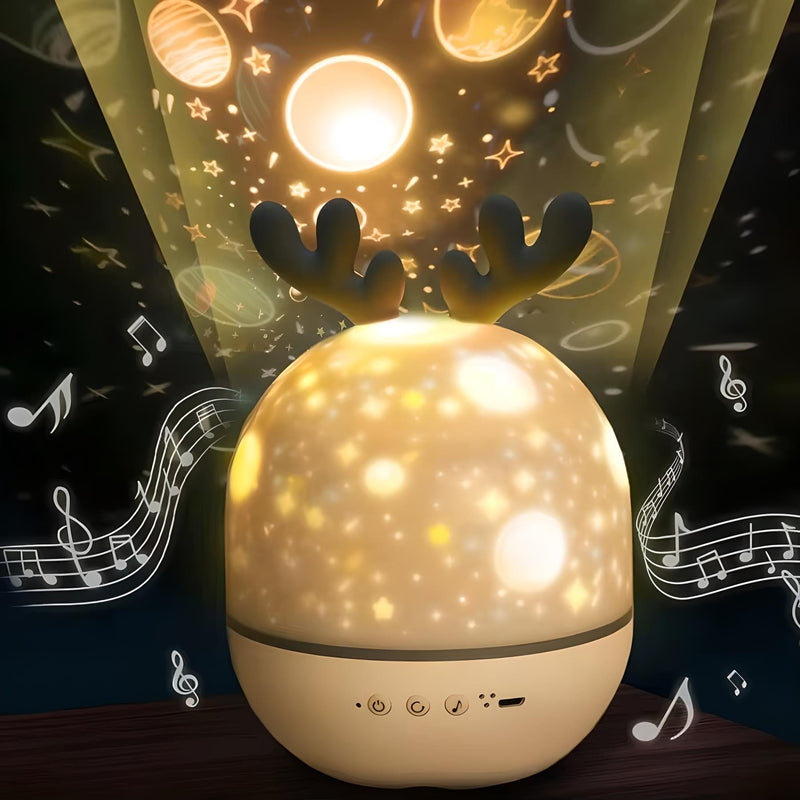
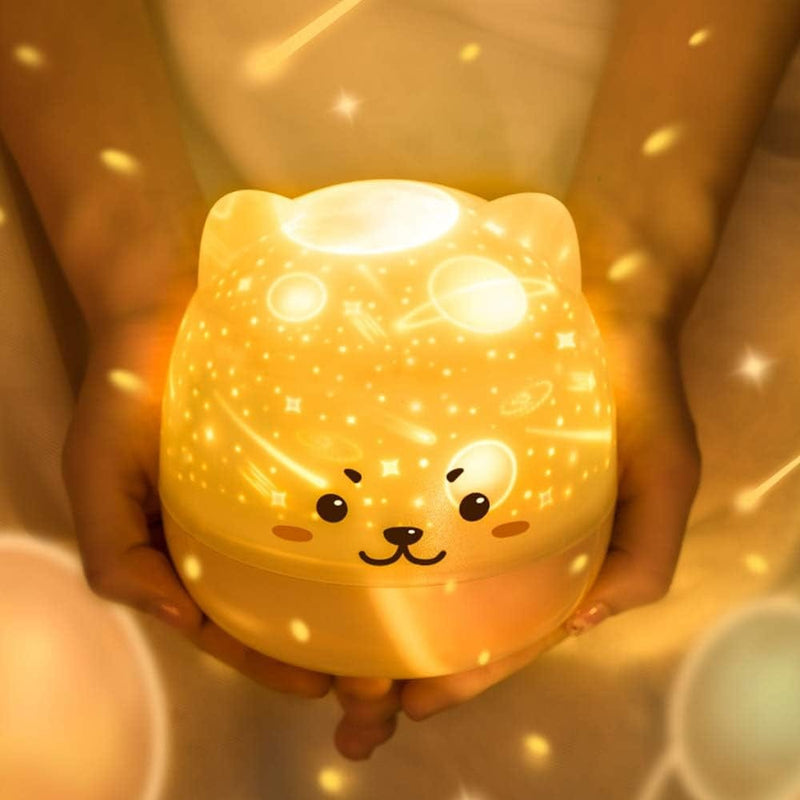
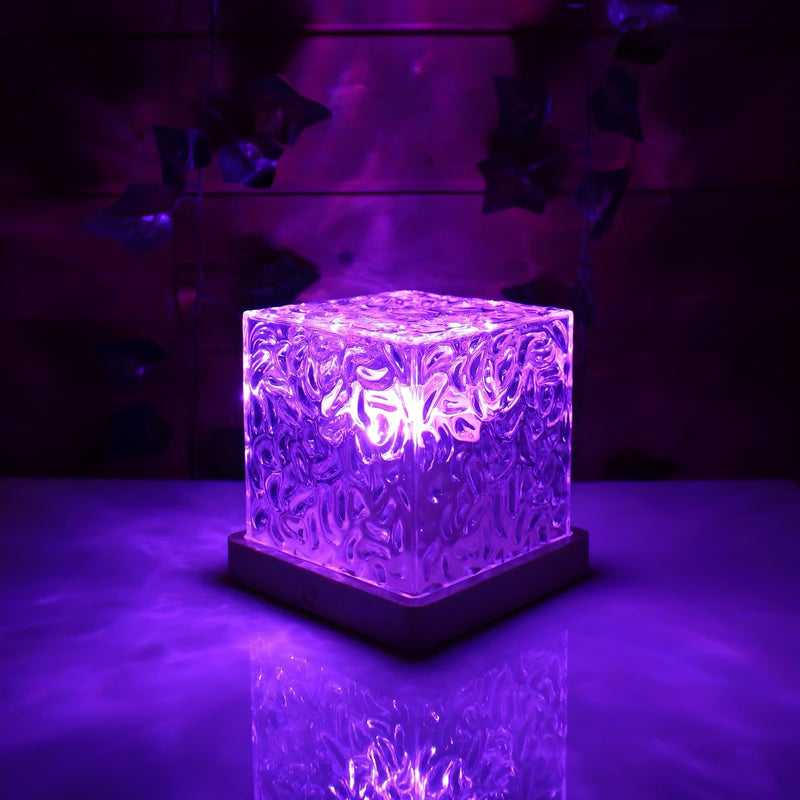
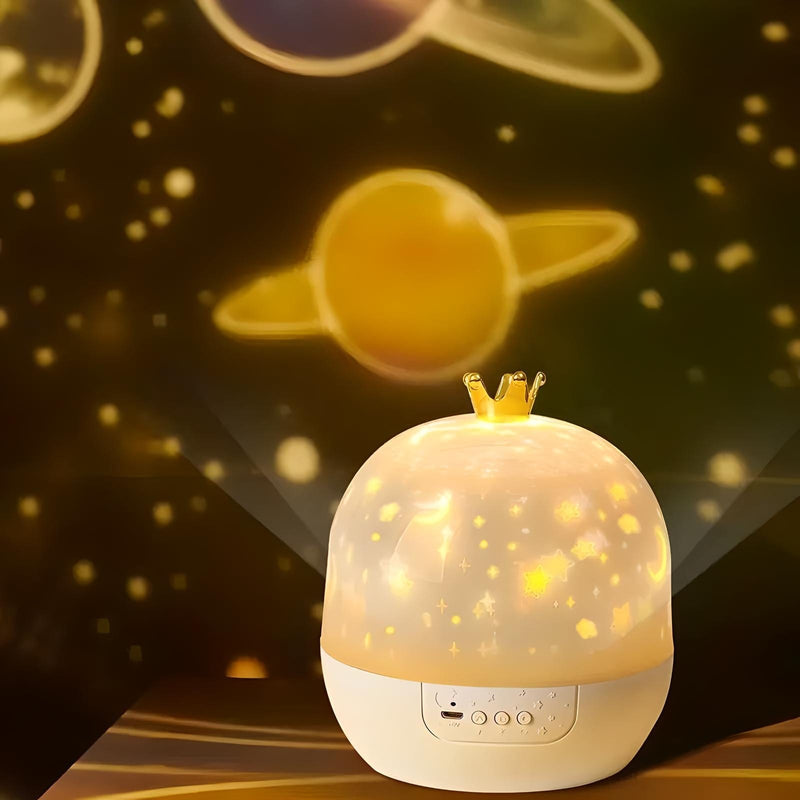
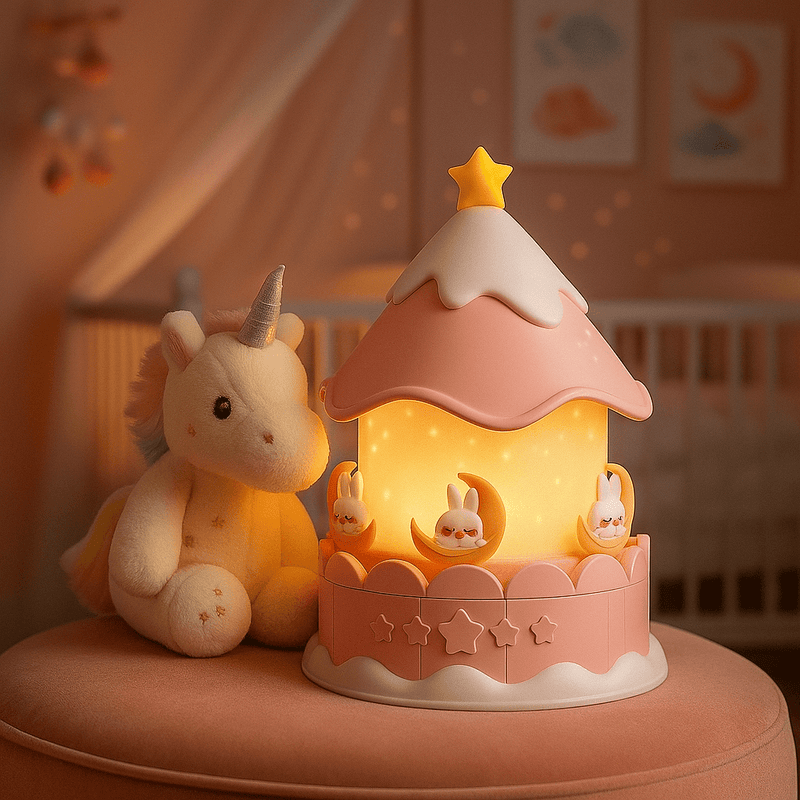
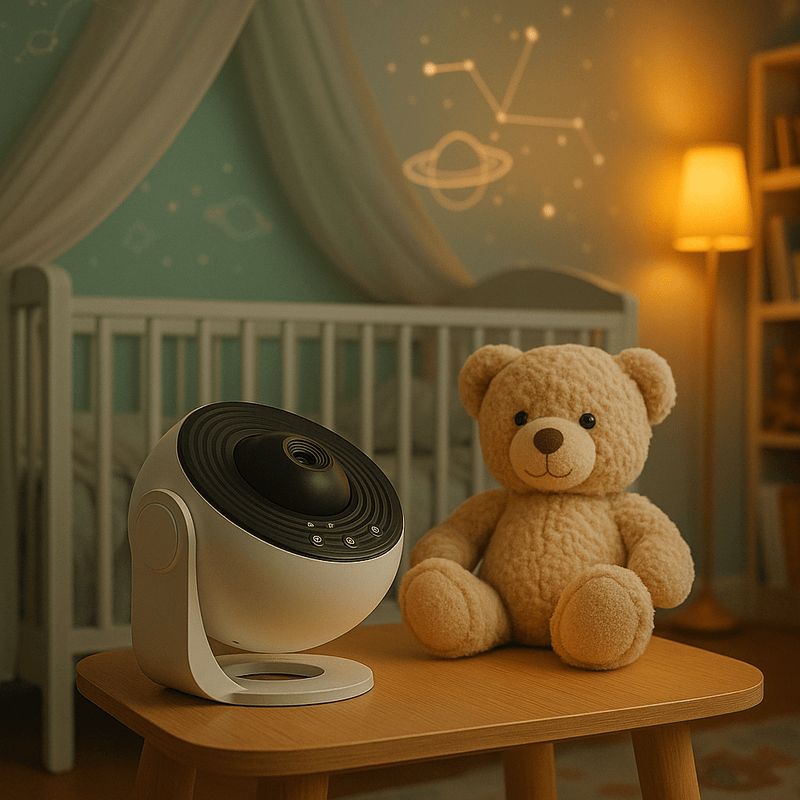
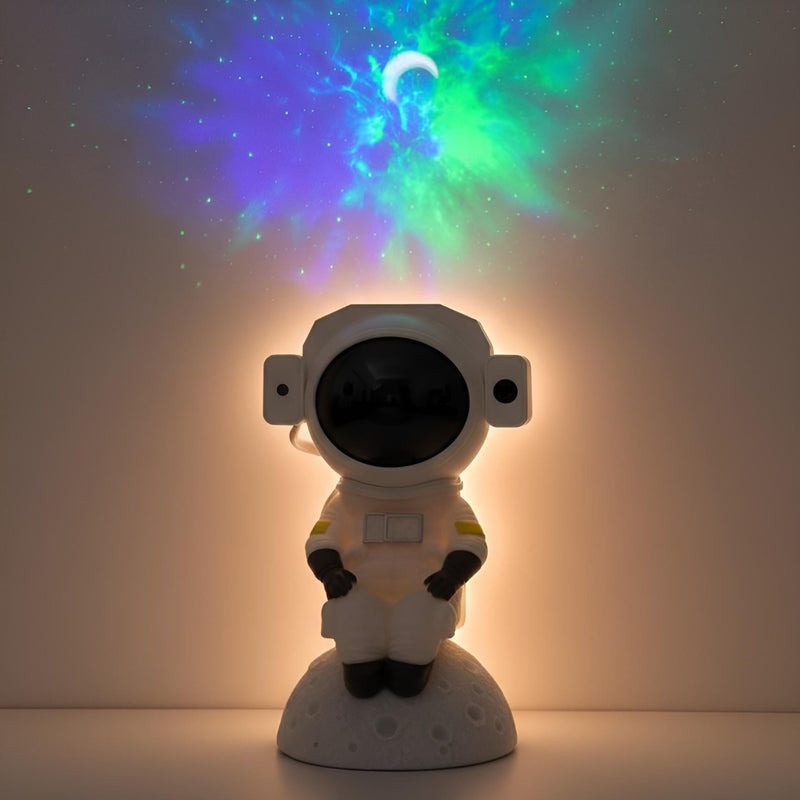
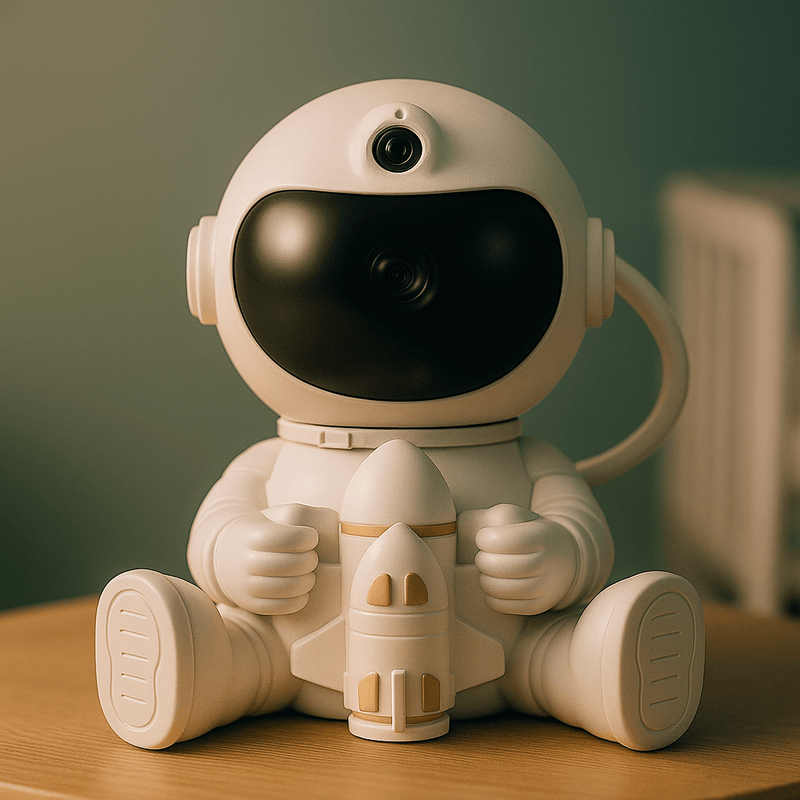
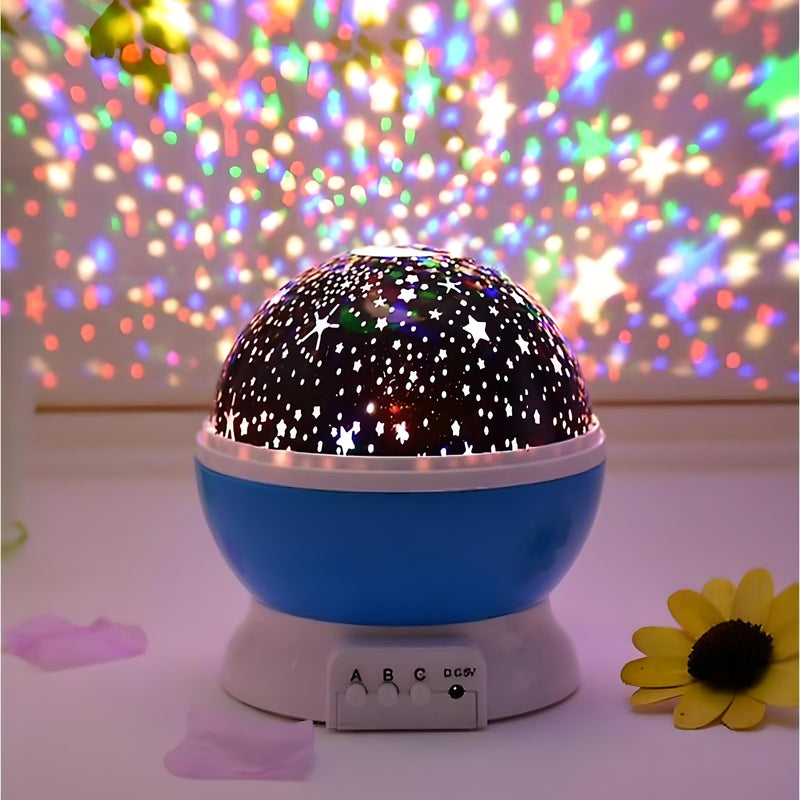
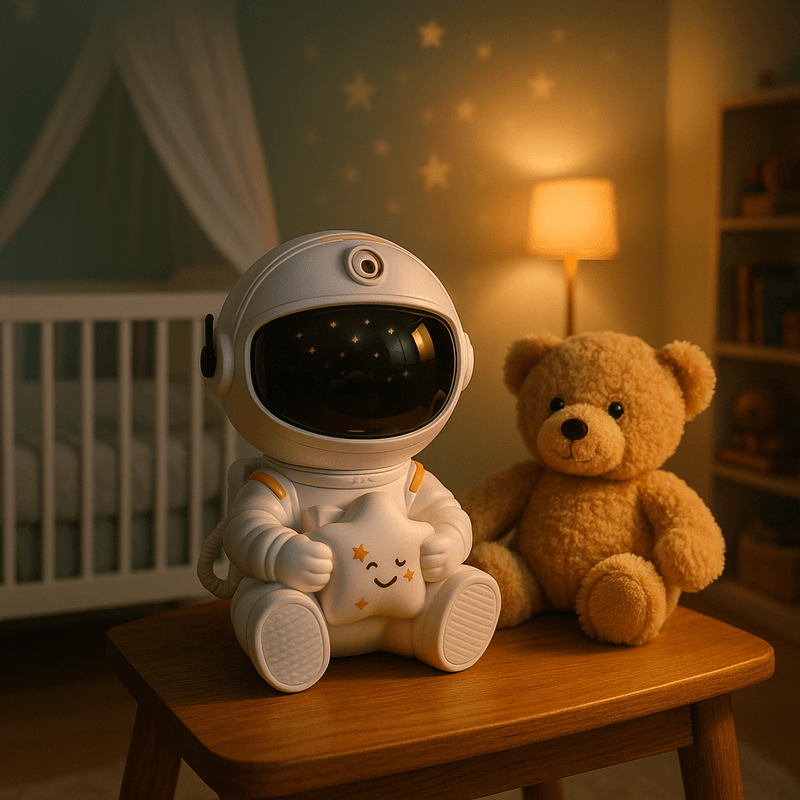
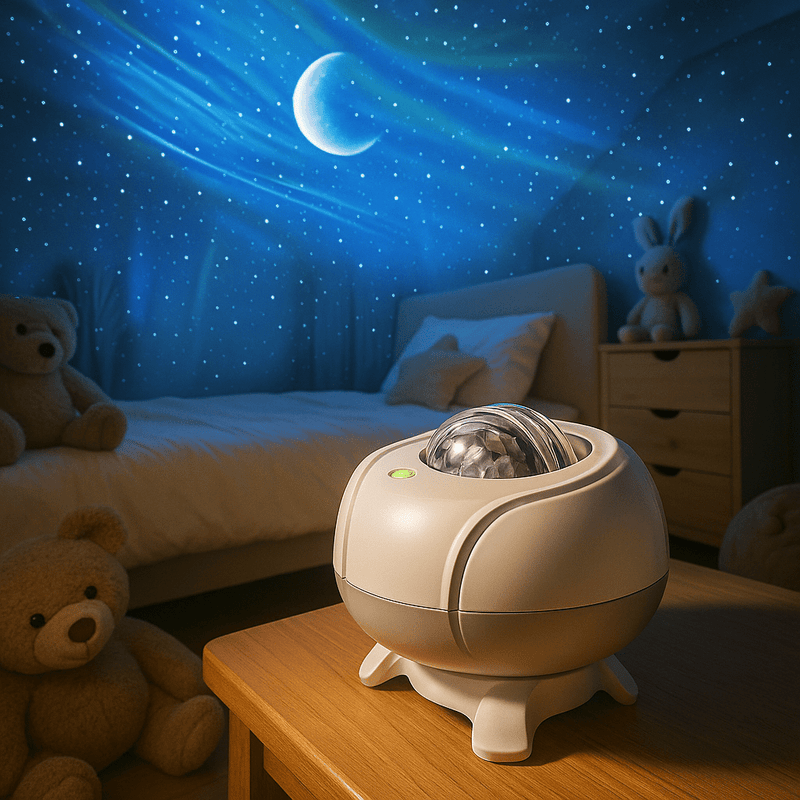
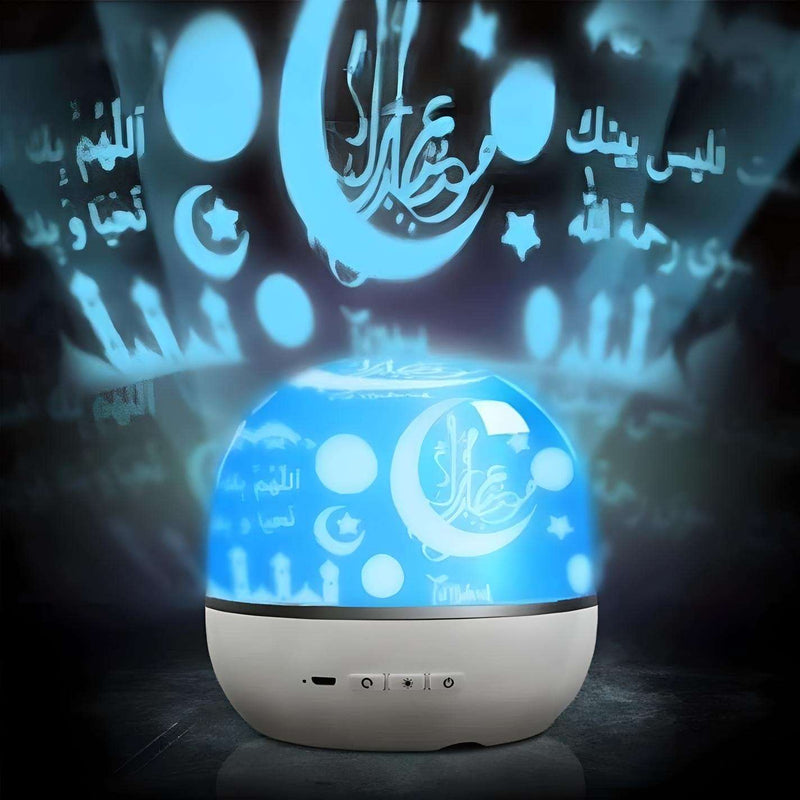
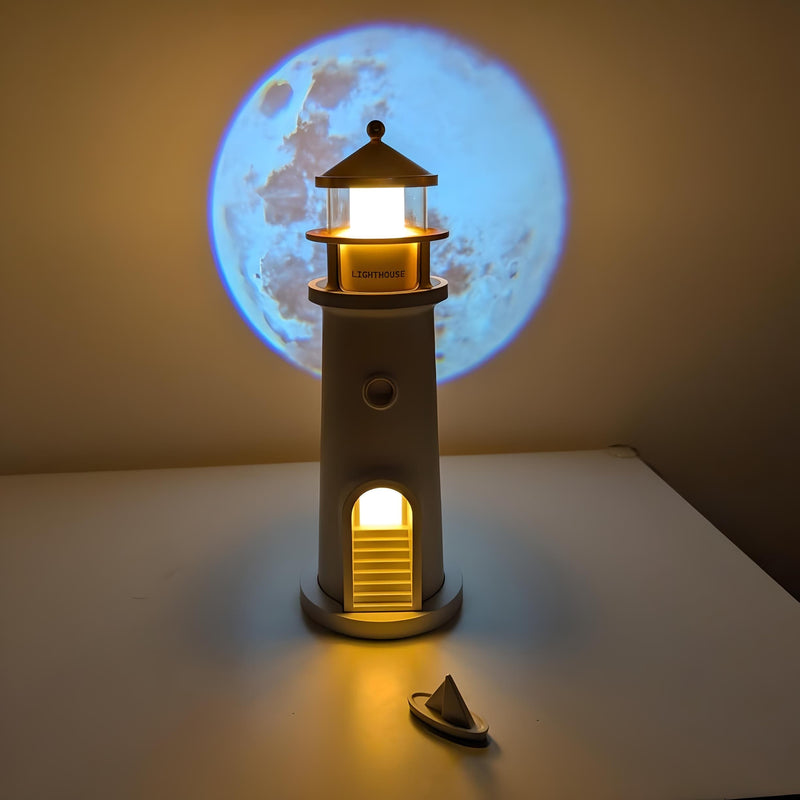
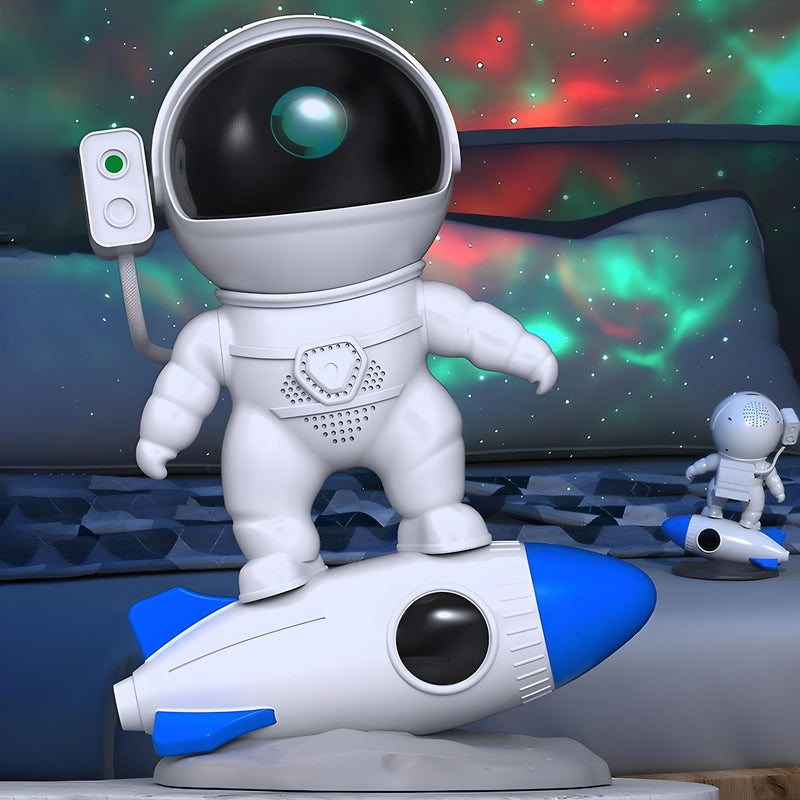
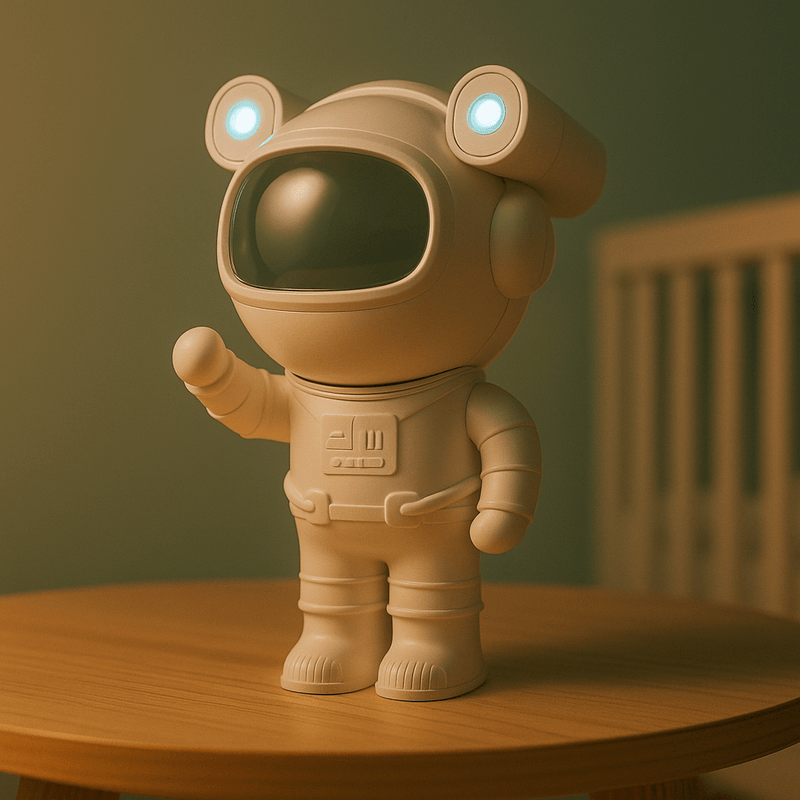
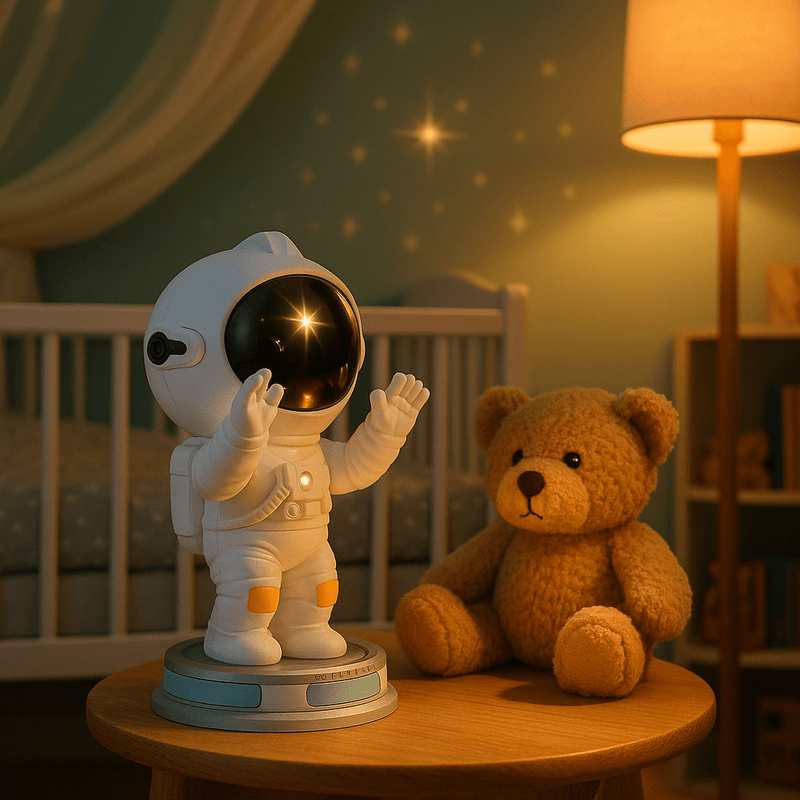
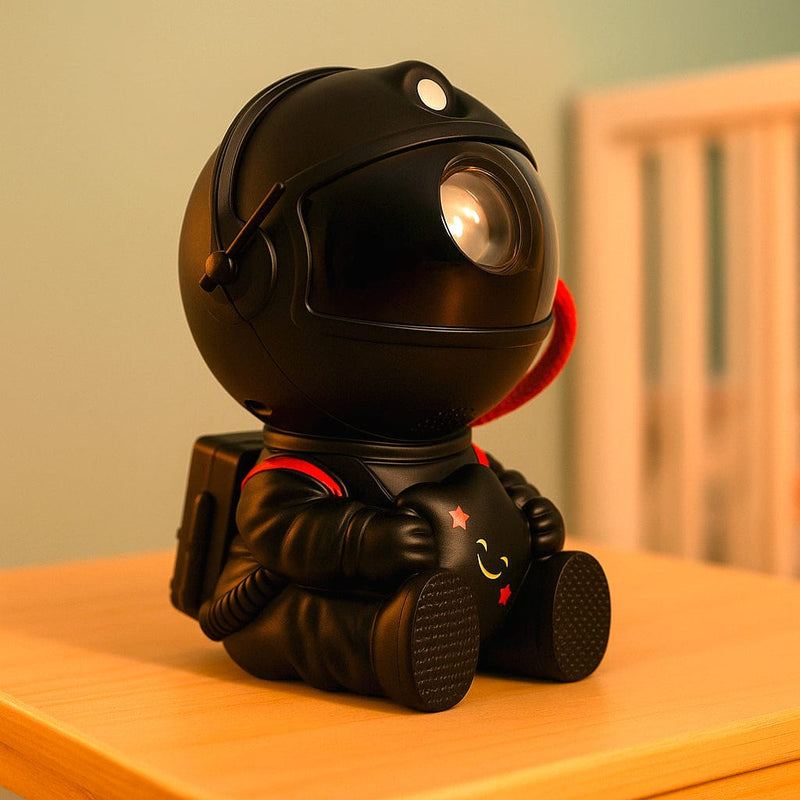
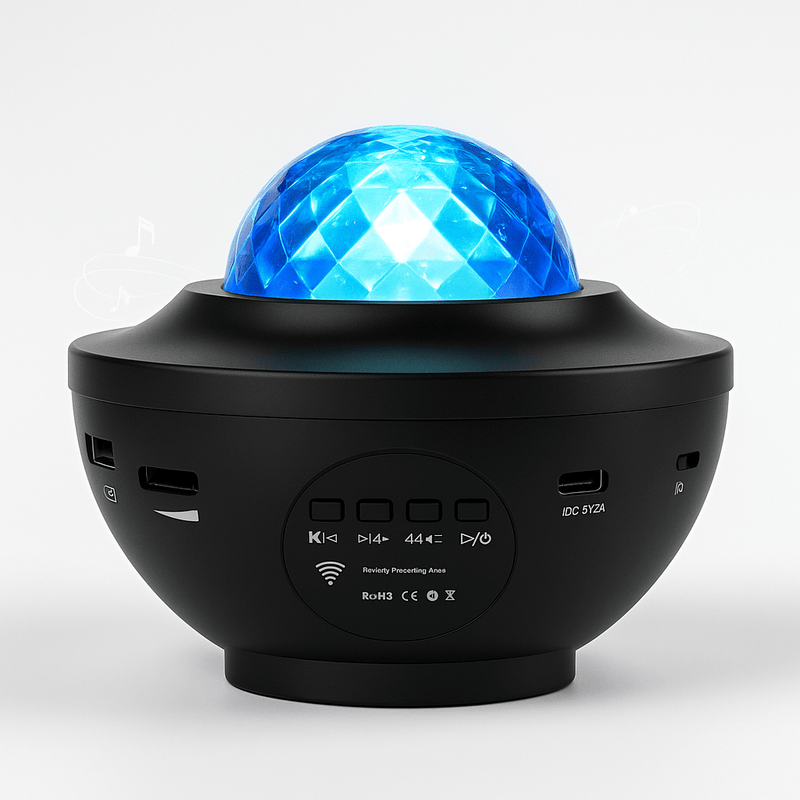
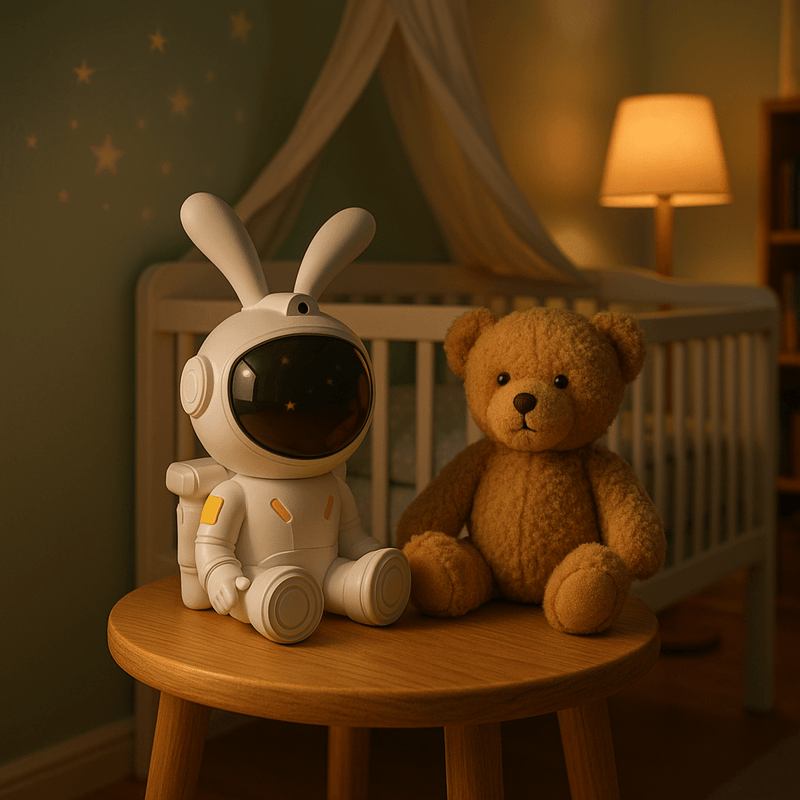
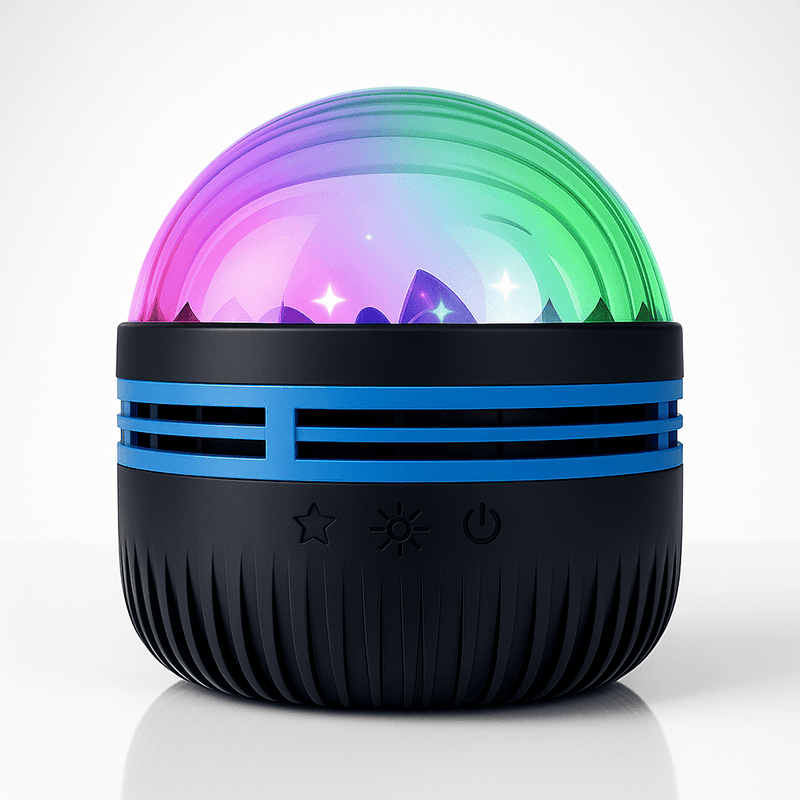
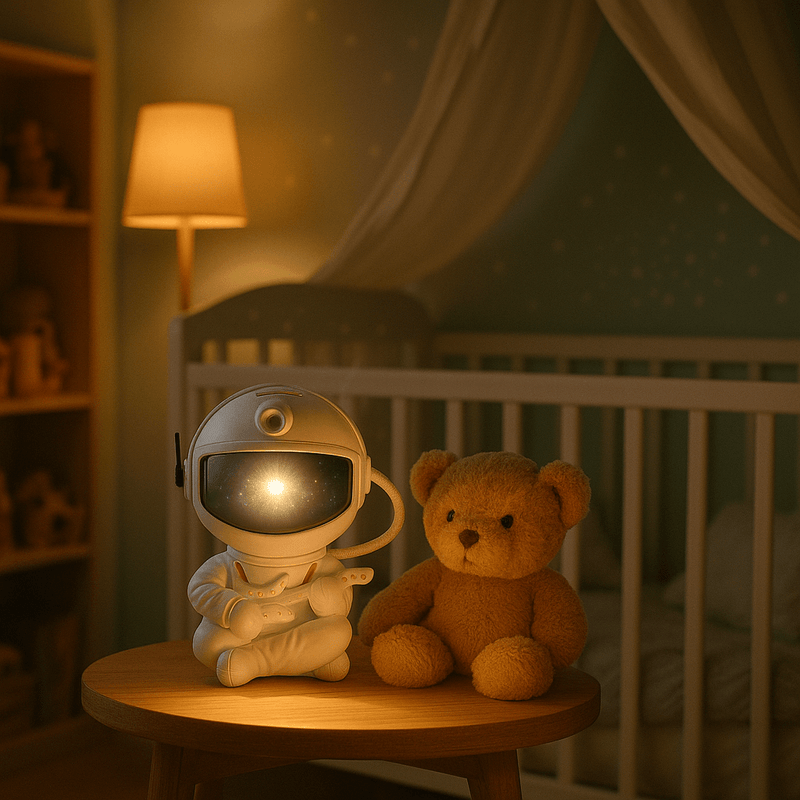
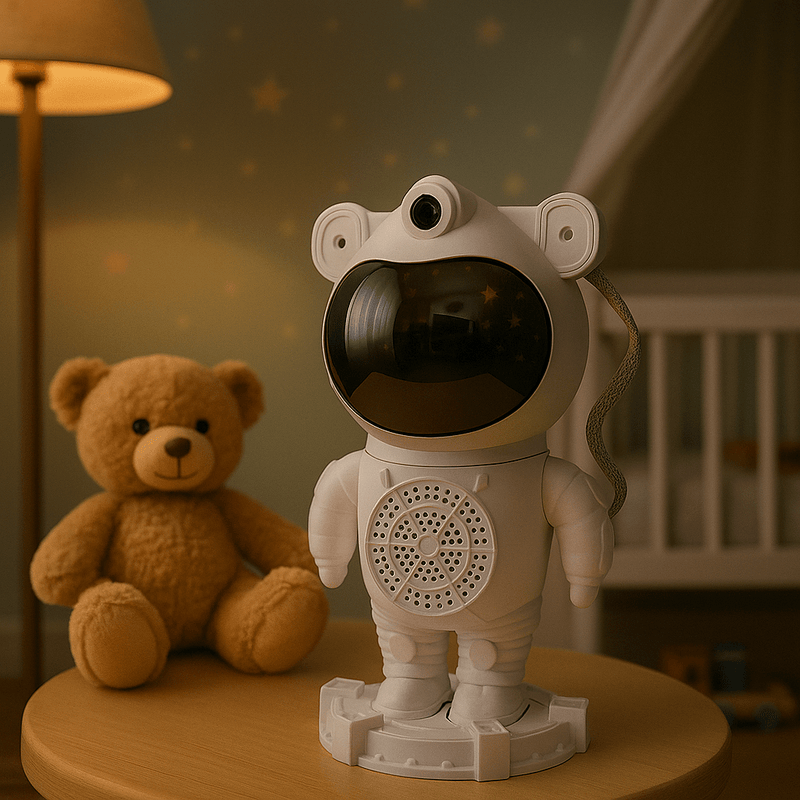
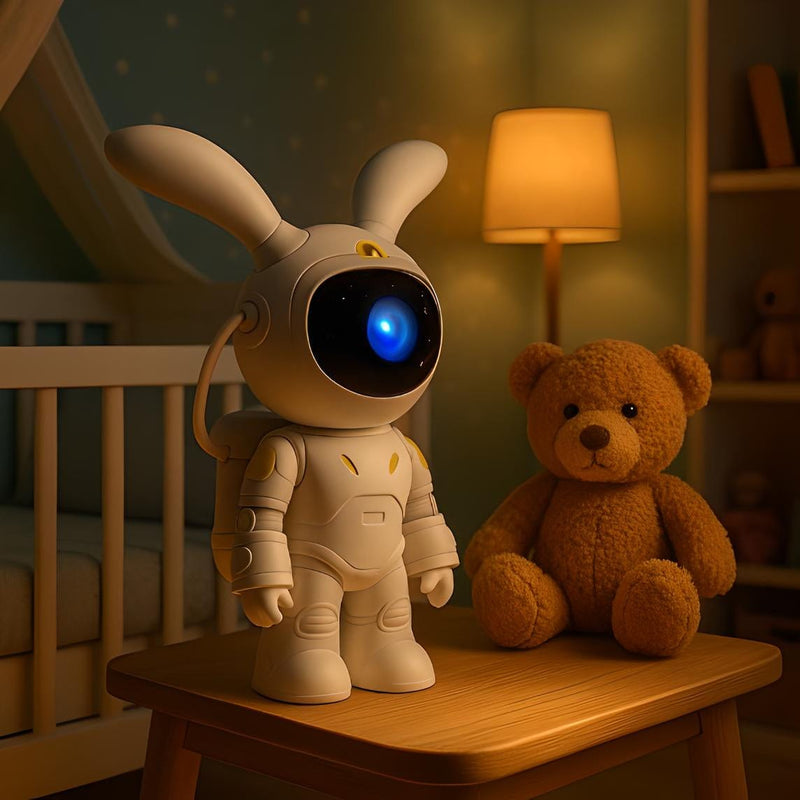
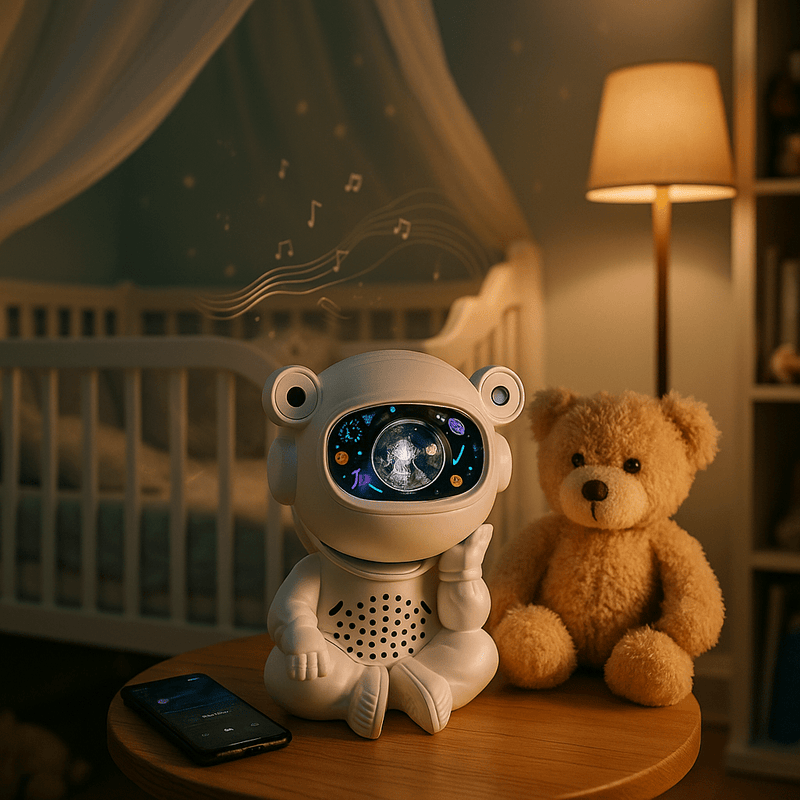
A baby projector night light turns the bedroom into a soothing starry sky and helps little ones drift off from birth. Stars on the ceiling, a starry sky across the walls, gentle melodies or white noise: each model is designed for a specific use. This page brings together our light-projection models to help you choose the one that suits your child's age, the layout of their bedroom and your evening routine.
Ceiling projection is the most soothing format for a baby lying on their back. The light patterns appear directly in their field of vision, holding their attention without overstimulating them and easing the transition to sleep. These models are particularly suited to babies aged 0 to 12 months, when they spend most of their time lying in the cot.
For a sharp projection on the ceiling, the night light should be placed 1.5 to 2.5 metres from the ceiling. Any further and the image becomes blurred; any closer and it is too concentrated and loses its soothing effect. With a standard ceiling height of around 2.5 m, a night light placed on the bedside table at bed height works in the vast majority of bedrooms.
| Criterion | Recommendation |
|---|---|
| Distance to ceiling | 1.5 to 2.5 metres |
| Projection angle | Tilts through 360° |
| Colour temperature | 2,700 K maximum (warm light) |
| Recommended age | From birth |
| Battery life | 6 to 10 hours on average |
For older children who want a more immersive atmosphere, our selection of kids' night lights includes ceiling projectors featuring characters and animated scenes.
A star projector night light casts a starry sky across the walls and ceiling. Unlike a classic ceiling projection that displays a fixed pattern, starry sky models create a complete light environment that wraps around the room. It is the favourite format of children from 18 months, who are starting to explore their world and love immersive atmospheres.
Three technologies are available for starry sky night lights:
Projection coverage varies by model. Star night lights generally cover between 10 and 20 m², easily enough for a standard child's bedroom of 9 to 12 m².
Musical projector night lights combine the soothing visual effect of light projection with a gentle soundscape. This double stimulation, visual and auditory, is particularly effective for babies who need several cues to fall asleep. According to paediatricians, a regular sound environment reduces the time it takes babies to fall asleep by 15 to 20 minutes on average.
The sounds on offer vary by model:
The volume should stay below 50 decibels at baby's ear, the equivalent of a whispered conversation. Models with a timer switch off automatically after 15, 30 or 60 minutes, so the sound does not play all night. For parents who prefer continuous sound without a melody, our range of white noise night lights offers a simpler alternative.
The most complete models in our range of musical baby night lights combine up to 20 different sounds with adjustable light projection.
A baby projector refers to stand-alone models designed as true projection devices, rather than a simple night light with a secondary light feature. These models offer better image quality, wider coverage and extra features such as remote control or app control.
| Type | Area covered | Main use |
|---|---|---|
| Simple night light | Bed + bedside table | Falling asleep |
| Starry sky projector | 10 to 20 m² | Whole-room atmosphere |
| Themed projector | Ceiling + 1 wall | Immersive world (space, ocean) |
| 360° projector | The whole room | Fully immersive effect |
Stand-alone projectors typically run on a USB-C rechargeable battery lasting 8 to 12 hours at full brightness. That easily covers a full night, especially as most models are set to switch off automatically after 1 to 2 hours. Themed projectors, such as our astronaut night lights, turn the bedroom into a real space world with projected planets and constellations.
Choosing a projector night light comes down to three key criteria: the type of projection you want, the sound features and the power source. Each has a direct impact on everyday use and on the product's lifespan.
Ceiling projection suits babies aged 0 to 18 months, who spend most of their time lying on their backs. Wall or 360° projection becomes relevant from 18–24 months, when your child explores the bedroom more, standing or sitting up in bed.
The music option is not a gimmick: it meets a real need. Babies who struggle to fall asleep benefit from a regular sound environment that masks household noise (TV, conversations, appliances). On the other hand, some children are distracted by music and fall asleep better in silence.
| Child profile | Recommended choice |
|---|---|
| Newborn (0–3 months) | Womb sounds or white noise |
| Baby (3–12 months) | Gentle lullabies or nature sounds |
| Toddler (1–3 years) | Choice of melodies with a 30-min timer |
| Child (3 years and over) | No music or short music (15 min) |
The power source directly affects how practical the night light is to use. USB-C rechargeable models offer 8 to 12 hours of battery life on average and are easy to move around, which is particularly handy for holidays and nights away from home. Plug-in models run continuously with no need to recharge, but must be placed near a socket.
For a newborn aged 0 to 3 months, choose a ceiling projector night light with warm light (2,700 K maximum), fixed patterns or very slow rotation, and a white noise or heartbeat option.
LED projector night lights pose no danger when placed outside baby's direct line of sight. However, avoid laser models for children under 3, as their concentrated brightness can be too intense.
 Free delivery from £55Across the whole range
 Dispatched within 1 to 2 working daysTracked delivery
 Easy returns within 30 daysTime to try it at home
 Reply within 24 hoursMonday to Friday
 Secure paymentCard, PayPal, Apple Pay, Shop Pay
