How to Help Baby Link Sleep Cycles: What Every Parent Should Know
Dear parents, welcome to this guide dedicated to your baby's sleep. 🌜 Understanding how to help your little one sleep well is essential for their development and for your peace of mind. We know that nights can sometimes be difficult. This article is here to offer you practical and caring advice, to support you on this beautiful, but sometimes exhausting, parenting adventure. Get ready to discover tips and information for calmer nights for your baby... and for you!

Chapter 1: Understanding How to Help Baby Sleep Well
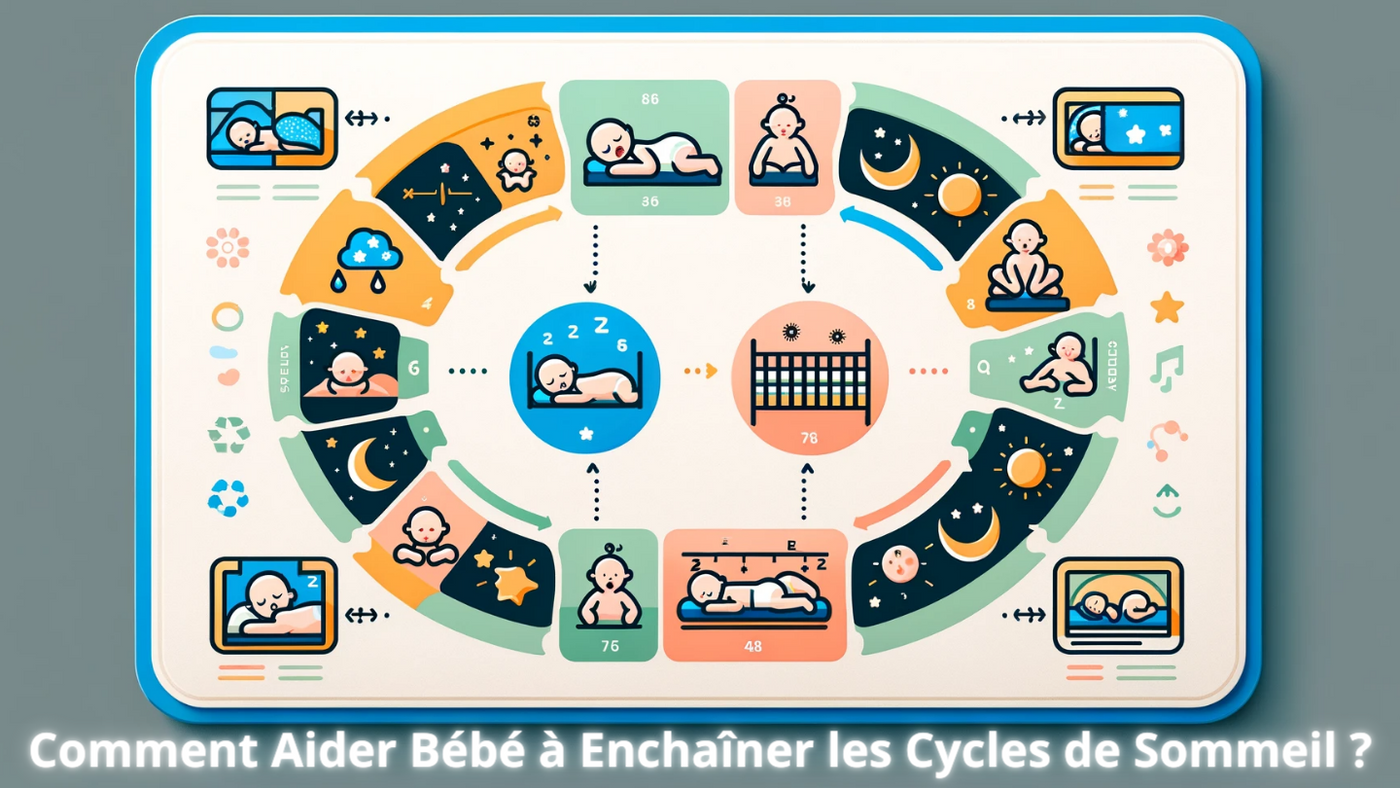
Sleep cycles in babies
A baby's sleep is different from an adult's. 🌌 Babies spend more time in light sleep, which makes them more likely to wake up. It is a natural mechanism for their safety and their regular feeding.
How sleep changes with age
Sleep changes significantly during the first year. At around 4 to 6 months, many babies start to sleep for longer at night, but this varies from one child to another. Understanding this development will help you adapt your routines.
Signs of lack of sleep
Recognising the signs of tiredness in a baby is crucial for adjusting their sleep habits. Here are some key indicators to watch for:
- Irritability: If your baby seems grumpier or more restless than usual, this could be a sign of tiredness.
- Frequent crying: Tears for no apparent reason may indicate that the baby is tired and needs rest.
- Difficulty staying focused: A lack of interest or difficulty concentrating on games and activities can be a sign that sleep is needed. 🤔
These signals are important indicators that can help you understand when it is time to put your baby to bed or to offer them a moment of relaxation.
Chapter 2: Key Techniques to Help Baby Sleep Well
Establishing a bedtime routine
Setting up a regular bedtime routine is fundamental. Activities such as bath time, reading a story or singing a lullaby help signal to the baby that it is time to sleep.
Creating an environment conducive to sleep
A calm, comfortable and slightly cool environment promotes good-quality sleep. 💤 Remember to reduce noise and adjust the lighting to create a soothing atmosphere.

Using night lights
Using night lights in baby's room is more than just a question of decoration; it is an effective strategy for improving the quality of their sleep. These soft little lights offer a reassuring source of light that can help soothe night-time fears and create an environment conducive to sleep. 💡

See this mushroom night light, ideal for improving the quality of your baby's sleep.
Chapter 3: When Helping Baby Sleep Well Becomes a Challenge
Common sleep problems in babies
Identifying and understanding common sleep problems in babies is essential to respond to them effectively. Here are some frequent difficulties to look out for:
- Frequent waking: It is common for babies to wake up several times during the night. This can be due to several factors, such as hunger, the need for comfort, or shorter sleep cycles.
- Refusing to sleep: Sometimes, babies may resist bedtime or have trouble falling asleep. This behaviour can be linked to overstimulation, discomfort, or unsuitable bedtime routines.
These challenges, although often temporary, call for understanding and a suitable approach to ensure restorative sleep for the baby and the family.
When to consult a professional

Resources and support for parents
You are not alone on this adventure. 🤗 There are many resources, from books to online forums, where you can find advice, support and shared experiences with other parents.
Conclusion
We hope these tips will help you improve your baby's sleep. Remember, every child is unique and it can take time and patience to find what works best for your family. Rest assured, you are already doing a wonderful job by informing yourself and seeking to give your child the very best. 💖 Good luck on this magnificent adventure that is parenthood!