The Must-Read Parenting Guide to Mastering Your Child's Tantrums Like an Expert!
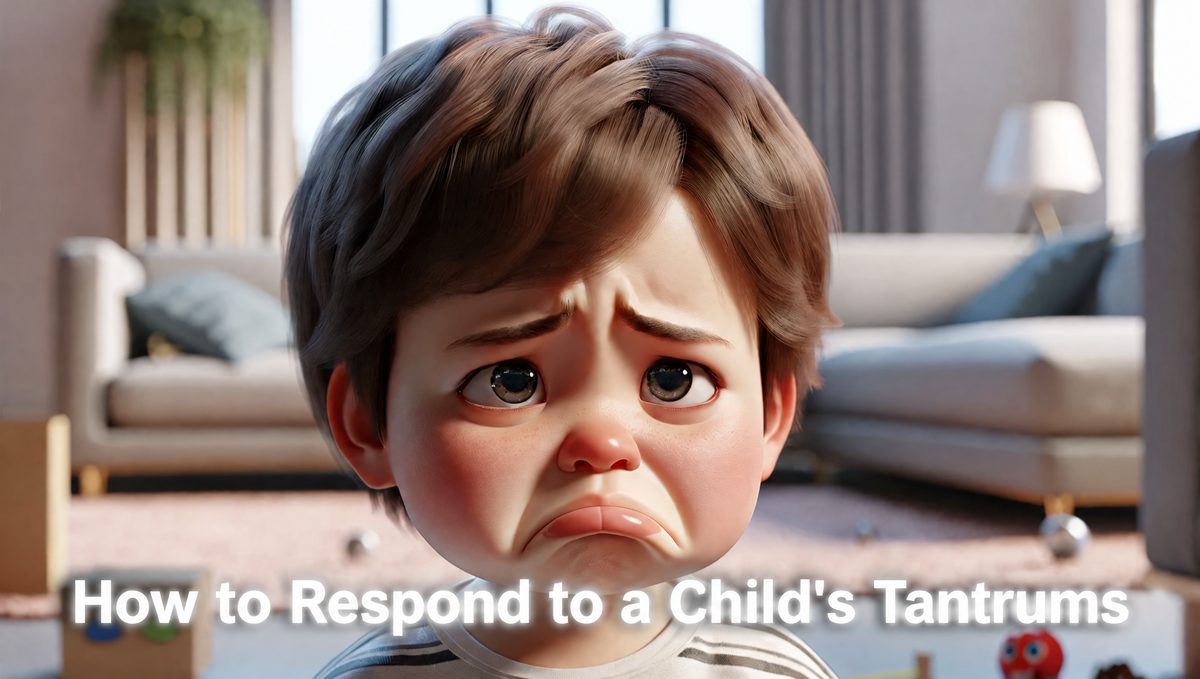
Ah, children's "tantrums"... 🤦♂️ How should you react to a child's tantrum? It's the million-euro question for all parents, isn't it? In this article, we're going to share a few tips and strategies with you to help you navigate these sometimes choppy waters. So, make yourself comfortable and let's get to the heart of the matter!
Article contents
Recognising a Tantrum in Children.
Impact of Tantrums on Their Development.
Understanding the Causes of Children's Tantrums.
Role of the Environment.
Strategies for Managing and Preventing Tantrums.
Self-Management of Tantrums by the Child.
Types and Causes of Tantrums.
Practical Examples and Solutions.
Recognising a Tantrum in Children.
Knowing when a child is having a tantrum is crucial for any effective intervention. In this section, we'll explore how to identify a tantrum and understand its impact on the development of the child's personality.

Defining a Tantrum.
Let's start at the beginning: what exactly is a tantrum? A tantrum is when our little one refuses to put their shoes on because they're not the right colour, or insists on eating only pasta at every meal. 🍝 It's this seemingly irrational demand that often leaves us parents at a loss.
What is a tantrum?
In short, a tantrum is a strong expression, and sometimes a dramatic one, of a desire or a frustration. It's the dramatic arts in the service of toddlers!
Telling a tantrum apart from a legitimate need.
It's crucial to distinguish a tantrum from a legitimate need. If your child is crying because they're hungry or tired, it's not a tantrum. It's up to us, as parents, to read between the lines. 🕵️♂️
Impact of Tantrums on Their Development.
Tantrums aren't just irritating moments; they play a role in the child's development. They test limits, express their individuality and learn to cope with frustration.
Impact on Personality.
Every reaction to a tantrum shapes the child's personality. A consistent and empathetic approach helps to develop resilience and emotional intelligence. On the other hand, unpredictable or harsh reactions can encourage negative behaviour.
Understanding the Causes of Children's Tantrums.
You know, understanding tantrums is a bit like being a detective. 🕵️♀️ We're trying to find out what lies behind these little moments of crisis.

Exploring the Triggers.
Understanding what triggers a tantrum is the first step in managing it. It may be due to tiredness, hunger or a feeling of insecurity. Let's observe these triggers so we can better meet the child's needs.
Tantrum triggers.
Tantrums can come out of nowhere, can't they? But they're often triggered by tiredness, hunger or even stress. Yes, our little angels feel stress too!
The child's emotions, needs and impulses.
Behind every tantrum there's an unexpressed emotion or need. It's their way of saying: "Hey, I need some attention here!" 📣
Role of the Environment.
The environment plays a key role. A harmonious home can reduce tantrums, whereas a stressful environment can amplify them.

Influence of the Family, School and Social Environment.
Whether at home, at school or with their friends, children absorb everything. A good balance and a stable routine can work wonders in reducing tantrums. 🏡🏫
Strategies for Managing and Preventing Tantrums.
Managing and preventing tantrums requires well-thought-out strategies. This section focuses on immediate techniques to calm a crisis and on preventive methods to reduce how often tantrums happen.
Immediate Management Techniques.
When a tantrum erupts, it's important to act quickly and calmly. Using distraction, negotiation or positive reinforcement are effective ways of handling these situations.
What's more, by including night lights in your children's daily routine, you create a more soothing atmosphere, conducive to managing your little ones' intense emotions. The presence of a soft light reduces temper tantrums linked to fear or anxiety.

See this marmot night light, ideal for managing temper tantrums linked to fear or anxiety
Handling a Big Temper Tantrum.
A significant study in the field of parental discipline and temper tantrums in children examined the impact of parental discipline techniques on the severity of temper tantrums in toddlers. The study reveals that reduced use of power assertion and increased consistency in discipline can lead to a decrease in temper tantrums in children. These findings offer valuable insights for parents seeking to manage their children's tantrums effectively. When faced with a big temper tantrum, stay calm. Easier said than done, I know! But your calm is contagious. Breathe deeply and speak softly.
Communicating Effectively with the Child.
Talking at a child's level, literally and figuratively, helps enormously. Kneeling down to be at their level and using simple words can make all the difference. 💬
Prevention and Anticipation.
Preventing tantrums is as important as managing them. Establishing routines, setting clear limits and offering the child appropriate choices can go a long way towards reducing tantrums.
Preventive Strategies.
Prevention is better than cure! Create a routine, set clear rules and, above all, lead by example. Children are great imitators.
Handling Tantrums in Public.
In public, it's another level of challenge altogether. A tip? Divert their attention. A little game or a story can quickly calm them down. 🎲📚
Self-Management of Tantrums by the Child.
Imagine if our children could manage their own tantrums. A pipe dream? Not really! With a little guidance, it's possible. 🌟

Techniques for Involving the Child.
- Learning self-expression: Encourage your children to talk about their emotions. "I feel sad because..." It's a start.
- Role play: Play games where they have to express different emotions. This helps them to understand and manage their feelings. 🎭
Types and Causes of Tantrums in Children.
Like adults, children have various reasons for their tantrums. Understanding this is like holding the key to a hidden treasure. 🔑
Identifying and Understanding the Different Types of Tantrums.
Not all tantrums are the same. Recognising the different types helps you apply the right strategy. Let's look at the various tantrums and their underlying causes.
The "lack of words" tantrum.
The "lack of words" tantrum often occurs when the child can't express their needs or emotions. Encouraging communication and putting feelings into words can help to prevent this type of tantrum.
The power-struggle tantrum, etc.
The power-struggle tantrum is that moment when our little treasure stubbornly refuses to put on their shoes or insists on eating nothing but chocolate, thereby defying our authority. There are also several other kinds of tantrum. Each type has its own specific features.
Practical Examples and Solutions.
Sometimes the best way to understand how to handle tantrums is through concrete examples. This section offers real-life scenarios and practical advice for each situation.

Concrete Scenarios and Advice.
Common situations such as a tantrum at the supermarket or a refusal to do homework will be explored here, with practical strategies and solutions for each case.
- Situation: Your child throws a tantrum at the supermarket over sweets. 🍬
- Solution: Stay firm but calm. Offer a healthy alternative or divert their attention to something else.
Conclusion
In short, how should you react to a child's tantrum? It's quite an art! But with patience, understanding and these techniques, you can turn these moments of frustration into learning opportunities for you and your child. Remember, every tantrum is a window onto your child's emotions and needs. So let's take a deep breath, armed with these new strategies, and make bringing up children a joyful and enriching journey. 🚀🌈