

Separation anxiety: understanding it and comforting your child, from 8 months to adulthood
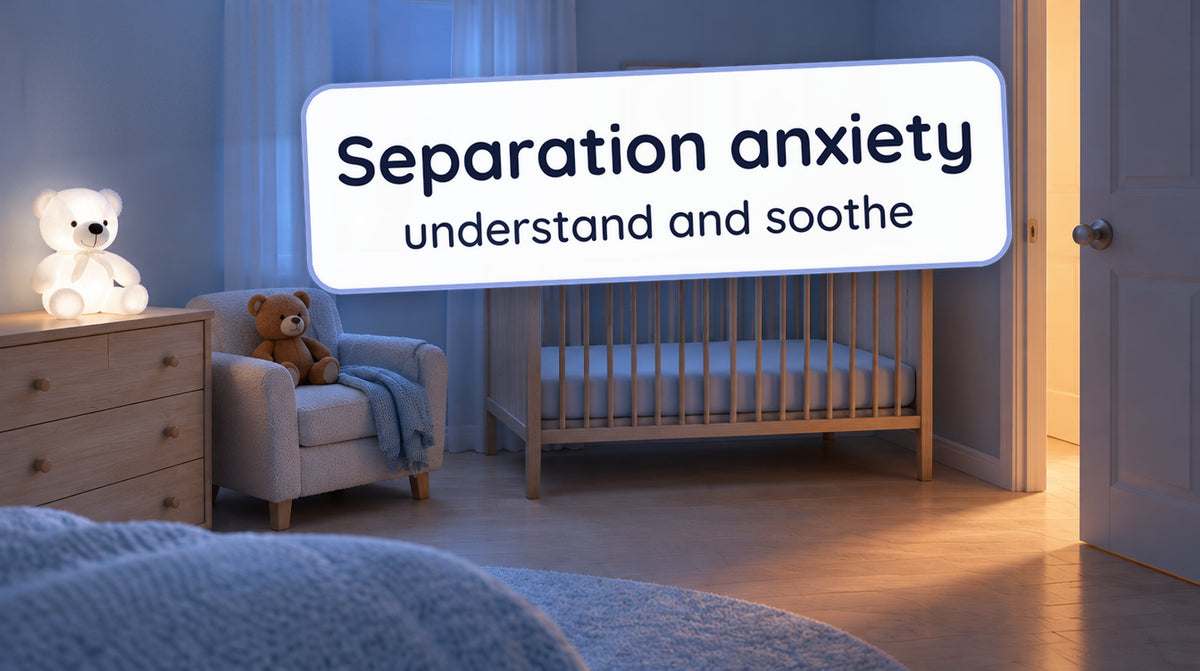
Separation anxiety is a normal stage of development: your child cries or clings when you move away. According to the MSD Manual, it starts at around 8 months, becomes stronger between 10 and 18 months and usually lasts until about age 2. A short goodbye, always the same, helps. After age 2, if it gets in the way of daily life, see a doctor.
You put your child down in the cot, turn off the light, take one step towards the door and the crying starts. The next morning at 8.30am, at nursery, it is the same scene the other way round: they grab hold of your coat. This guide covers both, with the age milestones from the MSD Manual and advice from UNICEF.
We talk here about what we know well, the bedroom in the evening and the bedtime routine, and we show a few of our plush night lights. None of them makes separation anxiety go away: they simply have their place in the evening routine.
This article gives general guidance taken from health sources (MSD Manual, UNICEF). It does not replace medical advice. If your child's behaviour worries you, talk to your GP or health visitor.
What is separation anxiety?
Separation anxiety is the distress a young child feels when separated from their parents or from the person who looks after them. The MSD Manual describes it as a normal stage of development: the child has not yet understood that a parent who disappears from view will come back.
It is the same thing whether people call it separation anxiety or fear of separation. The word “disorder” is only used in one specific case, when the anxiety goes beyond what is expected at that age and lasts (see When to see a doctor).
It is not a tantrum
A tantrum is about getting something: a toy, a screen, a biscuit. Separation anxiety is about a person. It appears at the moment you leave, and UNICEF presents it as a common stage, not a disorder.
It is not fear of the dark
Fear of the dark is about darkness and what it might hide. Separation anxiety is about your absence: light on or off, it comes back as soon as you leave the room. Our article on fear of the dark in children deals with that other situation.
What age: evenings and mornings, month by month
According to the MSD Manual, separation anxiety usually starts at around 8 months, becomes stronger between 10 and 18 months and lasts until about 24 months. Here is what that looks like, in practice, at bedtime and at drop-off.

| Age | In the evening, in their room | In the morning, at nursery | What helps |
|---|---|---|---|
| Around 8 monthsthe start | In the evening, in their roomCries when you leave the room, wants you there to fall asleep. | In the morning, at nurseryCries at the moment you hand them over. | What helpsSomeone they know, a short goodbye. |
| 10 to 18 monthsthe strongest phase | In the evening, in their roomMay wake up crying even though they were sleeping through. | In the morning, at nurseryClings and becomes more clingy as soon as you are about to leave. | What helpsAlways the same routine, a comforter, peek-a-boo. |
| Around age 2the usual end | In the evening, in their roomThe phase usually comes to an end: they gradually understand that you come back. | In the morning, at nurseryGoodbyes usually get easier as the phase ends. | What helpsTelling them what you will do together when you get back. |
| After age 2to keep an eye on | In the evening, in their roomIf bedtime anxiety stays strong and goes on, it is worth getting advice. | In the morning, at nurseryIf it stops them going to nursery or school, or playing with other children. | What helpsTalk to the doctor about it (see When to see a doctor). |
Ages: MSD Manual, “Separation Anxiety and Stranger Anxiety” (reviewed March 2025). Evening and morning signs: UNICEF and MSD Manual, which do not link them to a specific month; every child has their own pace.
The signs to look out for
A child going through separation anxiety cries or clings as soon as their parent moves away, refuses to fall asleep alone and reacts strongly to new situations. UNICEF lists these signs:
- Lots of crying at drop-off, at nursery or at the childminder's.
- A clingier child when you are getting ready to leave.
- Crying in new situations, or with someone they do not know.
- Refusing to fall asleep unless their parent, or the person who usually looks after them, stays close by.
- Waking up crying at night, when they used to sleep well.
Separation anxiety at night
At night, separation anxiety shows mostly at bedtime (the child does not want you to leave) and through waking up crying in a child who was sleeping through. If they cry when you leave the room, the MSD Manual advises talking to them from the next room rather than going straight back in: they hear your voice and know you are there.
We have covered these night wakings elsewhere, so we will not repeat them here. Our article why your baby wakes at night explains how to help them settle back to sleep, and the one on baby sleep regression has a section on separation anxiety at around 9 months. To build the routine itself, step by step, see our guide to the bedtime routine.
The night light, a marker in the routine
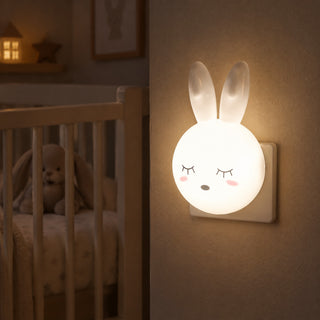
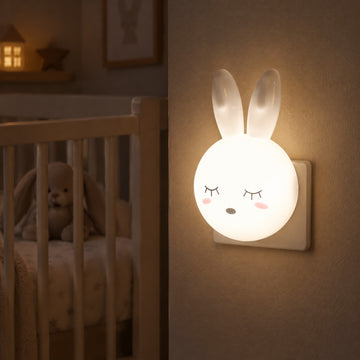
A night light has no effect on separation anxiety. It can, however, become one of the steps of the routine: you switch it on together, say goodnight and leave. Keep the light low and warm, placed on the chest of drawers, and nothing in a baby's cot. The real comfort object is still their comforter, the one they have chosen.
Nursery or childminder: the morning goodbye
In the morning, the goodbye goes better when the child knows the person looking after them, the goodbye is short and you stay calm. The MSD Manual also advises feeding them and letting them rest before you leave: a hungry or tired child copes less well with your departure.
- Get them used to it before the first day: UNICEF advises several meetings with the new carer while you are there, before leaving them alone together.
- Let the adult distract them with a toy or an activity as you leave (MSD Manual).
- Help them bond with an adult at nursery: the MSD Manual mentions this as a help, including when the anxiety is stronger.
- Tell them what you will do when you get back: a snack, the park, a bedtime story. UNICEF explains that this calms the fear of not seeing you again.
Evening and morning mirror each other: the nursery goodbye can be the same as the bedtime one, with the same words. Your child finds a familiar marker at both ends of the day.
What to do: 7 things that help
To help a child with separation anxiety, make goodbyes predictable and short, lengthen them little by little, and leave them a comfort object. Here are seven things recommended by UNICEF and the MSD Manual.

A short goodbye ritual, always the same
A kiss, a sentence, a wave, then you leave without dragging it out. UNICEF advises staying calm, smiling and saying you will be back soon.
Tell them when you will be back
Using their own markers: “after your nap”, “after your snack”. Tell them what you will do together when you get back.
Lengthen separations little by little
Start with short absences, a quick errand while a trusted family member or friend looks after them, then make them longer (UNICEF).
A comforter, their comfort object
UNICEF mentions a comforter or a small blanket as an object that can help a child calm down on their own when upset.
Play peek-a-boo
The MSD Manual explains that this game helps a child understand that someone they can no longer see has not disappeared.
Stay calm when they cry
The MSD Manual advises staying calm and reassuring and keeping your response to the crying brief at the moment you leave. Listen to them without playing down what they feel, UNICEF adds.
Keep going out yourself
According to the MSD Manual, giving up your own activities because of this anxiety could hold back your child's development. Your departures, followed by your returns, show them that you come back.
Our pick for the evening routine
These night lights do not treat or prevent separation anxiety. They give bedtime a gesture and a soft light that come back every evening, like the rest of the routine. The age shown comes from their product page: both plush toys are for children over 3; before that, they stay on the chest of drawers, out of reach.
 Baby, on the chest of drawers Silicone Chick Night Light BPA-free silicone, 2 touch brightness levels, 20-minute timer, USB rechargeable. From birth in the bedroom; for children to handle from 18 months. £32.90 See the night light
 Age 3 and up Teddy Bear Plush Night Light A plush teddy bear that lights up with a press, soft LED that does not get hot, 5 colours. From birth in the bedroom; for children to handle from age 3. from £21.90 See the night light
 Age 3 and up Bunny Plush Night Light 30 cm plush bunny, colour-changing tummy, 2 colours, battery powered. From birth in the bedroom; for children to handle from age 3. £33.90 See the night light
Our collection of plush night lights brings together other glowing plush toys for children over 3, and our baby night lights the models designed for little ones.
How long does it last?
The phase fades little by little, rarely all at once. The signs that it is easing are the opposite of those listed above: less crying at drop-off, a child who accepts that you leave their room and falls asleep without you. Every child moves at their own pace.
The MSD Manual places the end of the phase at around age 2: the child comes to understand that their parents come back. If it lasts beyond that and gets in the way of their life, the next section explains when to talk to a doctor.
When to see a doctor
Separation anxiety is normal until about age 2. It is worth getting medical advice if it continues beyond age 2 and gets in the way of the child's life, or if it stops them going to nursery or school or playing with other children: the MSD Manual then recommends an assessment.
- It lasts beyond age 2 and interferes with their development or daily life (MSD Manual).
- It stops them going to nursery or school, or playing with other children (MSD Manual).
- The signs have lasted at least a month with significant distress: this is the threshold from which a doctor may talk about separation anxiety disorder (MSD Manual).
- They often complain of headaches or stomach aches before separations: the MSD Manual lists these physical complaints among the signs of the disorder.

When a disorder is confirmed, the MSD Manual states that cognitive behavioural therapy is the main treatment, and that parents play a central role in it. In any case, if something worries you, your GP or health visitor is the right person to contact.
Separation anxiety in adults
The health sources we consulted describe separation anxiety mainly in children. The MSD Manual (professional version) classes separation anxiety among the anxiety disorders that tend to arise in childhood.
For an adult, its general guidance on anxiety disorders applies: anxiety that causes significant distress, interferes with daily life and does not go away on its own after a few days is a reason to talk to your doctor. The MSD Manual adds that most people can be cared for by their GP.
FAQ: your questions about separation anxiety
At what age does separation anxiety start?
Separation anxiety usually starts at around 8 months, according to the MSD Manual, and becomes stronger between 10 and 18 months. It is a normal stage of development: the child has not yet understood that a parent who leaves will come back.
How long does separation anxiety last?
Separation anxiety usually lasts until about age 2, according to the MSD Manual, with a stronger phase between 10 and 18 months. Every child has their own pace. If it continues beyond age 2 and gets in the way of the child's life, talk to a doctor.
What can you do about separation anxiety at night?
At night, keep the same bedtime routine, a short goodbye that is always the same, and let your child keep their comforter. If they cry when you leave the room, the MSD Manual advises talking to them from the next room rather than going straight back in. A dim night light can be part of the routine, without acting on the anxiety.
Separation anxiety at 18 months or 2 years: is it normal?
Yes, separation anxiety at 18 months is normal: the MSD Manual describes it as strongest between 10 and 18 months, then present until about age 2. At around 2, it usually comes to an end. If it stays strong beyond age 2 and gets in the way of nursery, school or play, medical advice is recommended.
What is the difference between separation anxiety and separation anxiety disorder?
Separation anxiety is a normal stage in young children. Separation anxiety disorder is a medical diagnosis: according to the MSD Manual, the anxiety goes beyond what is expected for the age, lasts at least a month and causes significant distress or clearly interferes with the child's life, for example going to school.
Does separation anxiety exist in adults?
The health sources we consulted describe it mainly in children: the MSD Manual classes separation anxiety among the anxiety disorders that tend to arise in childhood. In an adult, anxiety that causes significant distress, interferes with daily life and does not pass on its own within a few days is a reason to talk to your doctor.
Sources
- MSD Manual, Consumer Version, “Separation Anxiety and Stranger Anxiety”, reviewed March 2025: msdmanuals.com
- MSD Manual, Consumer Version, “Separation Anxiety Disorder”, reviewed October 2025: msdmanuals.com
- MSD Manual, Professional Version, “Overview of Anxiety Disorders”, updated April 2026: msdmanuals.com
- UNICEF Parenting, “How to manage your child's separation anxiety”, accessed 23/11/2026 (undated page): unicef.org
Method: this guide draws on the guidance in these sources, without any frequency figures. It has not been reviewed by a health professional and does not replace a consultation.
A plush night light for the evening routine
You switch it on together, you say goodnight: a gesture that comes back every evening.
DISCOVER THE PLUSH NIGHT LIGHTS